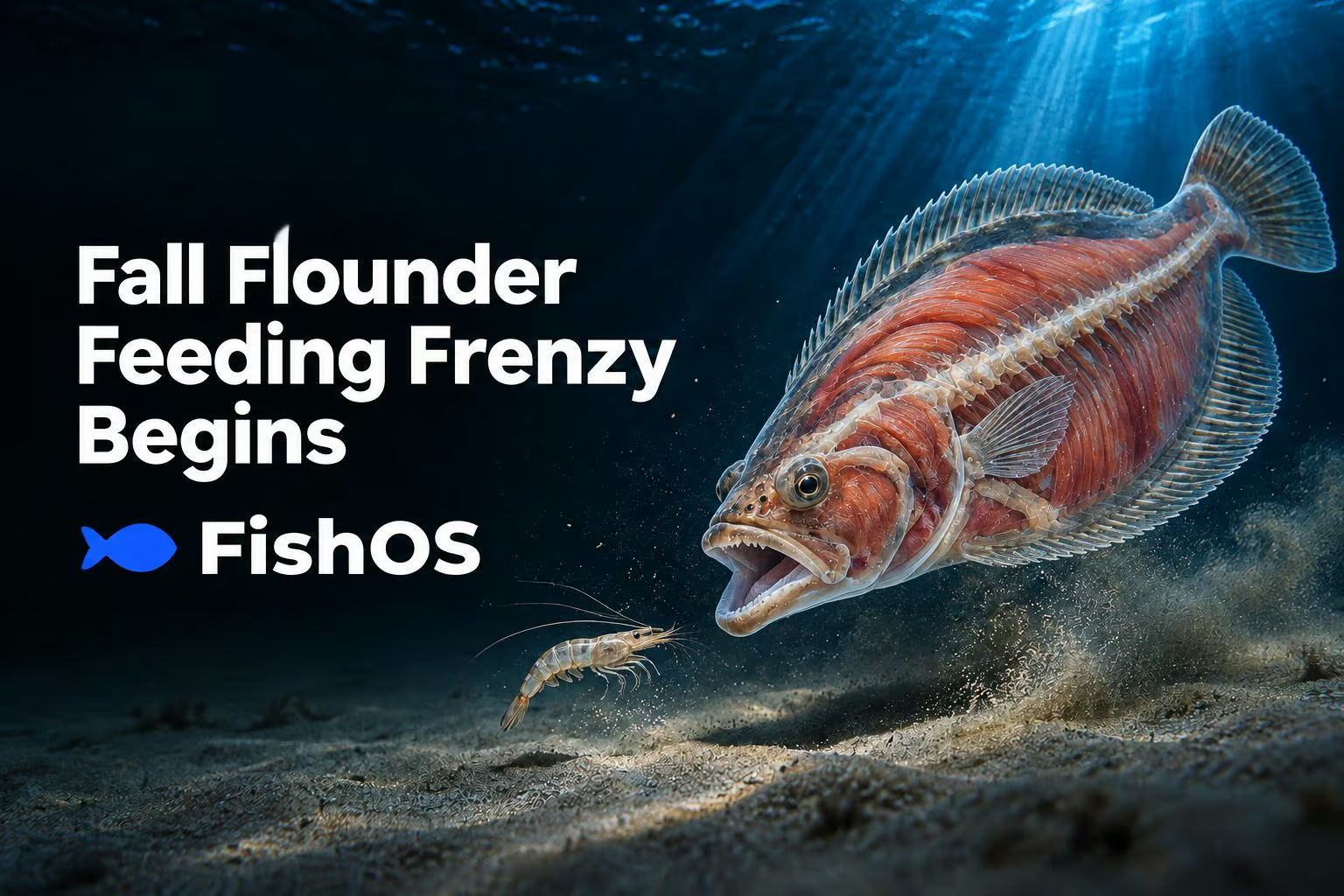
Fall fishing gives anglers three clear approaches: bottom fishing for migrating flounder, working beneath feeding gulls for trout and redfish, and anchoring around predicted solunar feeding windows. Capt.
How Do You Choose Fall Fishing Gear and Tactics?
| Target | Okruhlik’s Gear | First Action |
|---|---|---|
| Flounder | Scented soft plastic, preferably the Knockin Tail Lures Titan Series with a rattling tail | Work the lure along the bottom near passes |
| Trout and redfish beneath feeding birds | Durable soft plastic on a 1/4- to 3/8-ounce jighead | Work beneath the feeding activity |
| Larger trout after birds settle | Topwater lure | Watch for fish rising to the surface |
| Redfish and trout around a solunar window | Rod, reel and a solunar chart | Anchor near a productive edge |
How Do You Fish the Bottom for Flounder?
He described the fish stacking near passes and feeding on bait along the way.
For more detail on this coastal pattern, see Fall Flounder Fishing Along the Gulf Coast.
He keeps the lure tapping the bottom and twitches the rod sideways while wading or boating. He describes it as a finesse game that is part patience and part persistence, with the telltale thump bringing pure satisfaction. Read more about the best trout lures for streams, rivers and stocked ponds before selecting soft plastics for other fall species.
What Safety and Catch-and-Release Checks Apply?
- Check local access, water and weather conditions before entering or launching a boat.
- Use appropriate flotation, footwear and lighting for wading conditions.
- Check local regulations for the fishery and species you intend to fish.
- Keep the fish in the water when possible and minimize handling.
- Ask the relevant wildlife agency about current local restrictions before keeping flounder.
The Texas Parks and Wildlife Department lists a daily bag limit of five flounder, with a minimum length of 15 inches, except from November 1 through December 14, when the fishery is closed and the bag limit is zero.
How Do You Fish Below Feeding Birds?
Gulls dive-bomb over shrimp and schooling fish, with bigger trout sometimes joining the activity in fall. One angler’s choice beneath the birds is a heavier jighead weighing 1/4 to 3/8 ounce. He finds that weight provides the desired action without spooking the birds or fish.
The same angler flattens the barbs for quicker releases and faster recasts.
What Checks Apply Around Diving Gulls?
- Check local wildlife guidance about feeding or attracting birds.
- Keep cast paths clear of anglers, boats and other fishing lines.
- Observe the birds and fish before casting into the feeding area.
- Check federal, state and local rules for the species and water being fished.
- Prepare to dehook and release fish with wet hands and minimal handling.
NOAA Fisheries says to keep air exposure to a minimum if a fish must be removed from the water, and that less than 60 seconds is ideal. The agency also advises handling the fish as little as possible, using wet hands, and supporting a removed fish along the length of its body.
How Do You Work the Surface After Birds Settle?
When the schools settle and the birds thin out, a topwater lure can coax the bruisers to rise.
For fish handling after the strike, keep the lure ready for a quick recast and limit the time a fish spends out of the water.
How Do You Time and Anchor a Solunar Window?
The angler said his best bites often align with solunar peaks, based on his experience following solunar fishing tables since childhood. His approach is to anchor in a promising area during a predicted feeding window rather than move continuously.
On one personal trip with his sons, he said they missed the morning bite but stayed anchored near a grass edge where it met a sandy flat. Redfish then struck every few casts for 70 minutes, and the group occasionally caught more than one fish at a time.
See Fishing the Falling Tide: Where Outgoing Water Concentrates Food for related water-movement guidance.
What Checks Apply When Anchoring?
- Check the local rules for anchoring, access and fishing near passes or grass edges.
- Confirm the bottom conditions before setting the anchor.
- Monitor wind, weather, traffic and changing water conditions.
- Keep fishing and boating equipment arranged for a safe retrieval.
- Check the applicable bag, possession and length limits before retaining any species.
What Conditions Shape Fall Fishing?
He linked the fall opportunities to cooler air, thinner bait and more active feeding. Migrating flounder offered a bottom-fishing target, gull-led shrimp activity concentrated trout and redfish, and predicted solunar peaks gave him defined periods for anchoring and waiting.
Other official guidance supports the broader seasonal change. The Missouri Department of Conservation says fish are moving and feeding before winter, which can improve fishing for trout, catfish, bass, crappie and bluegill. The Virginia Department of Wildlife Resources reports that cooling water changes fish locations and fall fishing patterns, although its guidance focuses on largemouth bass.
The U.S. Fish and Wildlife Service says cooler temperatures can lead fish to conserve energy and focus on larger prey. It says slower, deliberate presentations that mimic the more lethargic movement of natural prey become far more effective.
What to Do Now
- Select a target and match the lure, jighead or topwater presentation to it.
- Check current local fishing, wildlife and water-access rules.
- Inspect the bottom, weather and access conditions before fishing or anchoring.
- Prepare a landing net, wet hands and release tools for fish handling.
- Record the target species, location, timing, gear and observed results for the next trip.
FAQ
What Happened During the 70-Minute Redfish Sequence?
During one personal trip with his sons, the angler said the group anchored near a grass edge meeting a sandy flat after missing the morning bite. Redfish struck every few casts for 70 minutes, and the anglers occasionally caught more than one fish at a time.
Related coverage
- Win the Ultimate Fall Fishing Package from Frogg Toggs
- The South’s Hot Winter Bass Fishing Really Starts Brewing in Fall