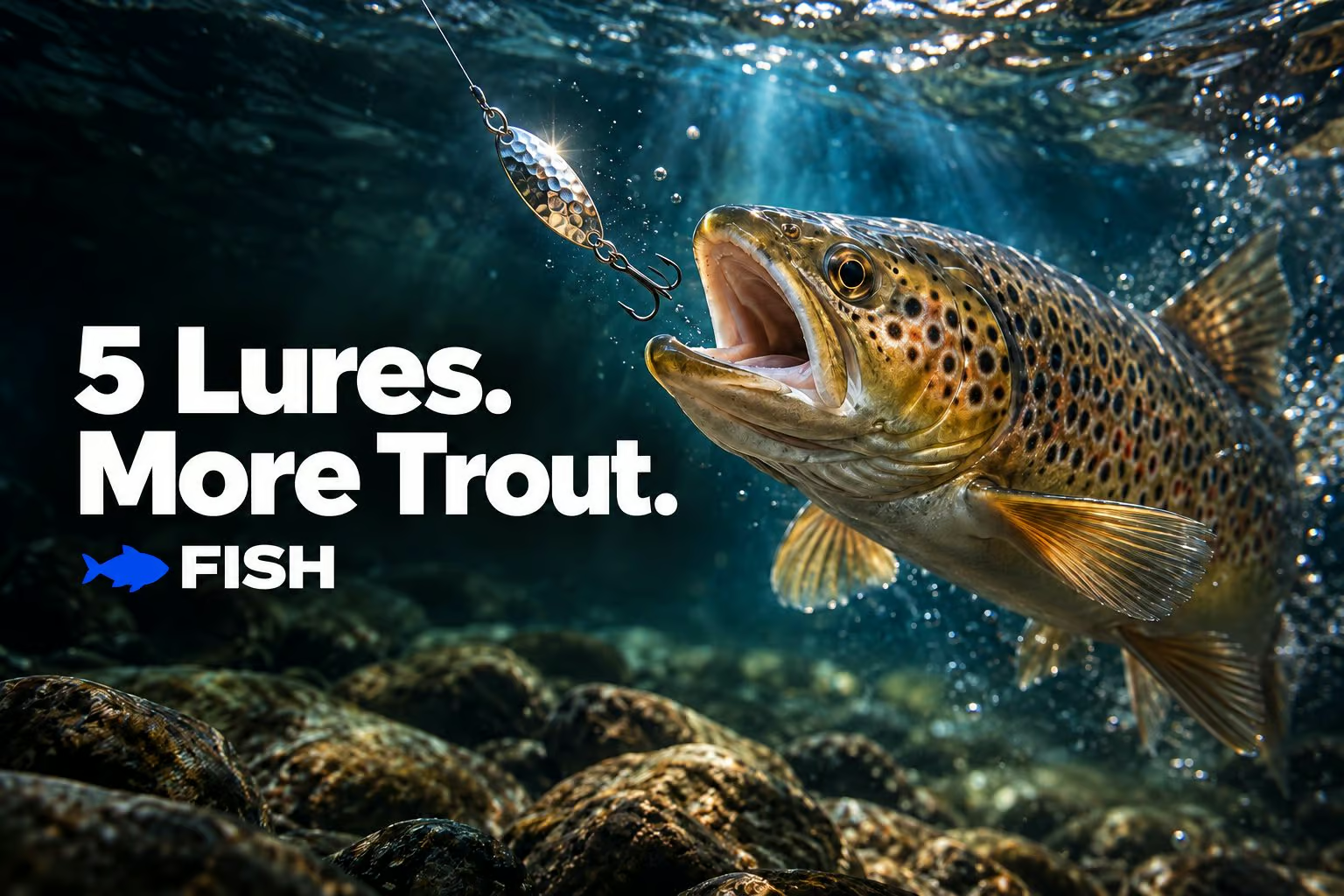
Anglers can walk onto the water carrying a small handful of proven trout lures and cover nearly every situation they will run into in a season, from tiny wild brooks in a mountain creek to rainbows in a stocked pond and brown trout holding deep in a Great Lakes tributary. The key is picking baits that imitate the local forage, change presentations quickly, and still cast and work on light tackle.
What trout eat and how that shapes lure choice
Trout are opportunistic feeders. They eat insect larvae drifting on the surface, minnows, worms, leeches and fish eggs, and the strongest lure selections mimic those offerings in look and action. On bigger waters such as Great Lakes tributaries or large rivers, the trout often key on baitfish and react to flash and vibration. On small streams and clear spring creeks, the same fish may ignore anything that does not look like a tiny nymph or scud drifting naturally with the current.
The wild rainbows, browns, cutthroats and brooks that dominate the freshwater scene all respond to the same broad categories of artificials when those categories are matched to conditions. Match the lure to what is active that morning, and the presentation decides the rest. Fast current and stained water usually call for flashier spinners or small spoons fished deeper. Calm, clear days with rising fish favor lighter, softer presentations that drift with the current.
Best soft plastic trout lure: Trout Magnet
The Trout Magnet pairs a tiny soft plastic body with a 1/64 ounce jighead built for ultralight fishing. The unusual shape of the jighead lets the lure fall horizontally, which gives it a look that pressured trout have not seen a hundred times before. Fished under a small float and allowed to move naturally through a pool or along a current seam, it doubles as a finesse option when the fish have seen every standard spinner and spoon in the book.
Color choice matters here, as it does with nearly every trout bait. Natural shades work in clear water. Brighter shades help in stained water or when targeting aggressive stocker rainbows. The lure is made in the United States from durable plastic, and the segmented body is built to suggest an invertebrate drifting through the column.
Best for: small streams, stocked trout, pressured fish and finesse presentations.
Best metal trout lure: Acme Little Cleo
The Little Cleo spoon has a hump-backed shape that produces a trademark wobble on the retrieve. That wobble mimics a wounded or struggling baitfish, which is exactly the silhouette a larger brown or rainbow trout likes to chase. Smaller sizes handle conventional trout fishing in rivers and ponds, while the larger sizes pull double duty on bigger trout in deeper water.
Where the Little Cleo earns its spot is in covering water. It casts a long way, sinks to predictable depths and recovers on a simple reel-retrieve. A steady retrieve is enough on active fish. A few cranks followed by a pause lets the spoon flutter and triggers following trout that did not commit on the first pass. Shore-bound anglers can use it to reach water that is normally out of range of lighter hardware.
Best for: larger rivers, lakes, deep pools and any situation that calls for covering a lot of water quickly.
Best inline spinner for trout: Blue Fox Vibrax
The Blue Fox Vibrax is a heavier inline spinner that has been catching trout for decades. The weight gives it a real advantage when long casts are required, or when the lure needs to reach deeper water fast. The rotating blade puts out flash and vibration at the same time, which is a valuable combination in stained or moving water, where trout may not be able to lock onto a silhouette but can still find the lure by feel.
As a search bait, the Vibrax is hard to beat. Rather than spending ten minutes working one small section of a river, an angler can sweep casts across current seams, along deeper edges and near structure to locate where trout are holding, then switch to a more finesse-driven presentation once fish are pinpointed. The trade-off is weight: it can be too much for tiny brooks and tight creek pockets.
Best for: larger rivers, lakes, deeper water and aggressive trout in current.
Best scented bait: Berkley PowerBait
Bergman PowerBait fills a slot the artificials do not cover. The bait is made from a porous material that absorbs water-soluble attractants and bleeds them out into the surrounding water. Instead of using standard oil-based plastics that trap scent inside, the formula releases scent continuously. It holds together under fast current and multiple strikes, and the texture and taste are close enough to real trout forage that fish tend to hold on rather than let go on the first headshake.
For anglers introducing kids to trout fishing, or anyone who simply wants to bend a rod at a stocked pond without working through a long learning curve on artificials, PowerBait is a quick path to a fish. It comes in putty, nuggets, eggs and a wide range of other shapes that work either as standalone baits or as scent and color add-ons around hooks and artificial presentations.
Best for: simple rigs at stocked ponds and as a tool for picky trout that have seen every lure in the local tackle shop.
Best hard trout lure: Rapala CountDown Minnow
The Rapala CountDown series is a classic balsa minnow imitation with a useful trick: it sinks at a predictable rate of roughly one foot per second. Counting the lure down after the cast lets an angler work the same bait through different parts of the water column. A short countdown covers shallow water. A longer countdown works a deep pool or a deeper run in a river.
The CD03 and CD05 sizes are workhorses for trout because they imitate the small baitfish on the local menu. The CountDown excels in current. Cast across a river, let it sink, then work it through a current seam, along the edge of a pool, or across a deeper run. A steady retrieve catches some fish, but adding subtle twitches turns the bait into a wounded baitfish. Even a pause or two with the fast fall rate triggers reaction strikes from trout holding deeper.
Best for: larger trout, baitfish imitations, current seams, deeper pools and any situation where controlling lure depth matters more than covering water fast.
Building a trout box that actually gets used
Starting a tackle box from scratch, the goal is one or two baits per category that handles the main situations on the water. The Trout Magnet handles finesse pressure. The Little Cleo covers water on lakes and big rivers. The Vibrax adds flash and vibration in stained and moving water. The Rapala CountDown gives a realistic baitfish presentation with controllable depth. PowerBait covers the days when the artificials get passed over.
The most common mistake is sticking with one presentation for too long. Trout switch feeding behavior throughout the day, sometimes by the hour. The lure that worked on the first stretch of a river often stops producing by the second stretch. Picking up a different style of bait, changing the retrieve, or working a different depth is usually the fastest fix.
A full tackle box of lures is not required to catch trout consistently. A small selection of different lures handles most situations an angler will run into across a season.
FAQ
What is the single best trout lure for a beginner?
For a beginner fishing stocked trout at a pond, Bergley PowerBait is the simplest path to bending a rod. For artificials on small streams, the Trout Magnet pairs an ultralight 1/64 ounce jighead with a small plastic body that imitates a tiny invertebrate and works on light tackle.
What color trout lure works in muddy water?
Brighter colors are the right call in stained or muddy water, since visibility is limited and trout rely more on flash than silhouette. In clear water, natural colors tend to outperform brighter shades because trout get a longer look at the bait before deciding to strike.
How do you choose trout lures by water type?
Match the lure to the depth, current and forage. Small streams with clear water and light pressure call for finesse: Trout Magnet or similar ultralight plastics on light line. Larger rivers and lakes with current or stained water respond better to spoons such as the Little Cleo, inline spinners such as the Blue Fox Vibrax, or controlled-depth hardbaits such as the Rapala CountDown. When those have been worked over, scent-based baits such as Bergley PowerBait can turn a slow day into action.