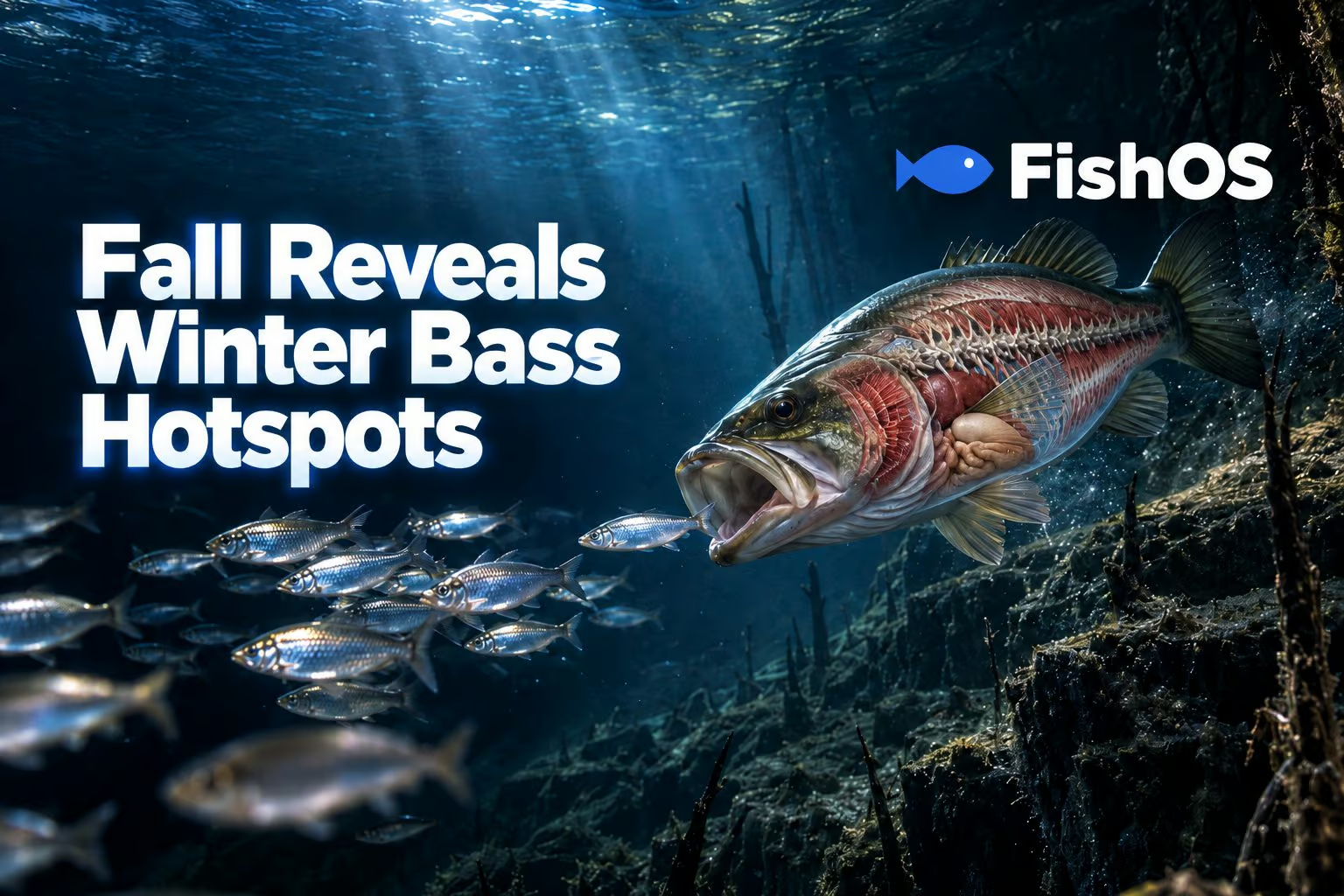
Anglers can read this fall’s conditions to set up winter bass fishing across the South, spotting where bass will feed and which lakes offer the safest open-water access. Watching bait activity, water temperature, aquatic vegetation and reservoir levels now points to the water that will hold fish once the cold settles in. Parts of Texas east to South Carolina, plus Florida, fish open water through winter, though cold fronts, low water and restricted access can still make trips hard.
Five fall signs show how the coming season may develop across Southern reservoirs and lakes.
Was Lake O’ the Pines full of shad?
Lake O’ the Pines in Northeast Texas, near Jefferson, fishes well in winter. The lower water pulls largemouth off shallow shoreline vegetation and onto predictable outside edges, points and drops.
Shad give the clearest read. Large schools of shad chased by largemouths in 10-foot depths near pilings and docks signal fish feeding hard to fatten up before winter. Electronics help locate where the bait suspends as the water cools. In winter, bass hold right under those pods and feed in the warmer part of the afternoon. Crowds thin out, so the reservoir is a good cold-weather option.
Crappie anglers should note a winter regulation.
How cold will it get on Guntersville?
Water temperature is the single most important factor for winter bass fishing in Alabama. It sets when fish move, how they feed and where they shelter. The prime window arrives when lake temperatures drop and stabilize in the 40s to low 50s. That sustained cold triggers the annual shad die-off, leaving schools of baitfish lethargic or dead as a predictable food source for bass.
Cold also locks bass into slow, predictable patterns on deepwater structure. A short warm-up can pull fish shallow, but the outlook points to a cooler winter with more cold fronts, so slow and deep is the safer bet this season. Tracking temperature shifts now is the best way to read the coming season on Guntersville, or on Lake Eufaula.
Gear can follow the water temperature. In fall, lean toward faster-moving baits, and slow your presentation down as the water cools.
Reading the migration on Toledo Bend
Fall conditions preview Toledo Bend. When water sits in the 70s, big largemouth move shallow to eat shad, and diving birds or bass busting bait along the banks mark the fall feeding frenzy. The main shift comes from late November through December, when cold fronts push morning water temperatures below the 60s. The chill browns the shallow grass, sends shad into the warmer, insulated depths of the old Sabine River channel, and stages bass first on secondary points before they drop to deep creek mouths and underwater humps.
The lake’s defined deepwater topography acts as a thermal buffer. Healthy hydrilla mats on deeper edges keep fish from scattering into open water too quickly, so checking the condition of those grass beds now indicates how the reservoir may hold fish through winter.
Scanning the surface on Lake Lanier
Fall surface activity on Lake Lanier previews the winter pattern. Aggressive topwater feeding by stripers and bass in October and November shows the lake is loaded with herring or shad, and abundant bait keeps stripers grouped in schools rather than scattering across the lake. Where fish break in fall hints at their winter areas: fish feeding in the Chattahoochee or Chestatee river arms tend to stay nearby and drop into the nearest deep channels as the cold sets in. Gulls wheeling and loons diving over bait can keep marking those schools after the topwater bite fades and the fish move deep.
How should you release a striped bass?
Stripers that get released are worth handling with care.
How winter rain could improve Florida access
Florida enters winter with low water in many bass lakes.
Vegetation is a growing issue there. Severe drought and low water levels have worsened the invasive plant’s spread.
Summer rain was not enough to pull the state out of drought. More water could raise low lakes, improve access to canals and boat ramps, and reduce the dense vegetation that has choked out lakes running low.
What to do now
- Check local water levels and access before a trip, especially at Florida lakes hit by drought. Confirm whether ramps and canals are open and clear.
- Watch bait and bird activity now. Mark spots with concentrated shad, herring, gulls, loons and diving birds, then revisit them as the water cools. On sonar, look for tight, cloud-shaped bait pods, watch for larger returns holding just beneath or beside the bait, and note the depth band so you can return to it later.
- Track water temperature. The prime winter window opens when a lake drops and stabilizes in the 40s to low 50s, the point that triggers the shad die-off and sets bass on deepwater structure.
- Match gear to the season.
- Release stripers carefully.
FAQ
Where can you bass fish open water in the South during winter?
Parts of Texas east to South Carolina, plus Florida, fish open water comfortably through winter. Cold fronts, low water and restricted access can still make individual trips difficult.
What water temperature starts the winter bass bite?
In Alabama waters such as Guntersville, the prime window arrives when lake temperatures drop and stabilize in the 40s to low 50s. That sustained cold triggers the annual shad die-off and locks bass into slow patterns on deepwater structure.
Will Florida’s drought ease this winter?
That water could raise low lakes and improve ramp and canal access.
Related coverage
- Moon Phase Fishing: Does It Really Help Catch Fish?
- Florida State Record Spotted Bass Caught in Fishing Tournament