<<<
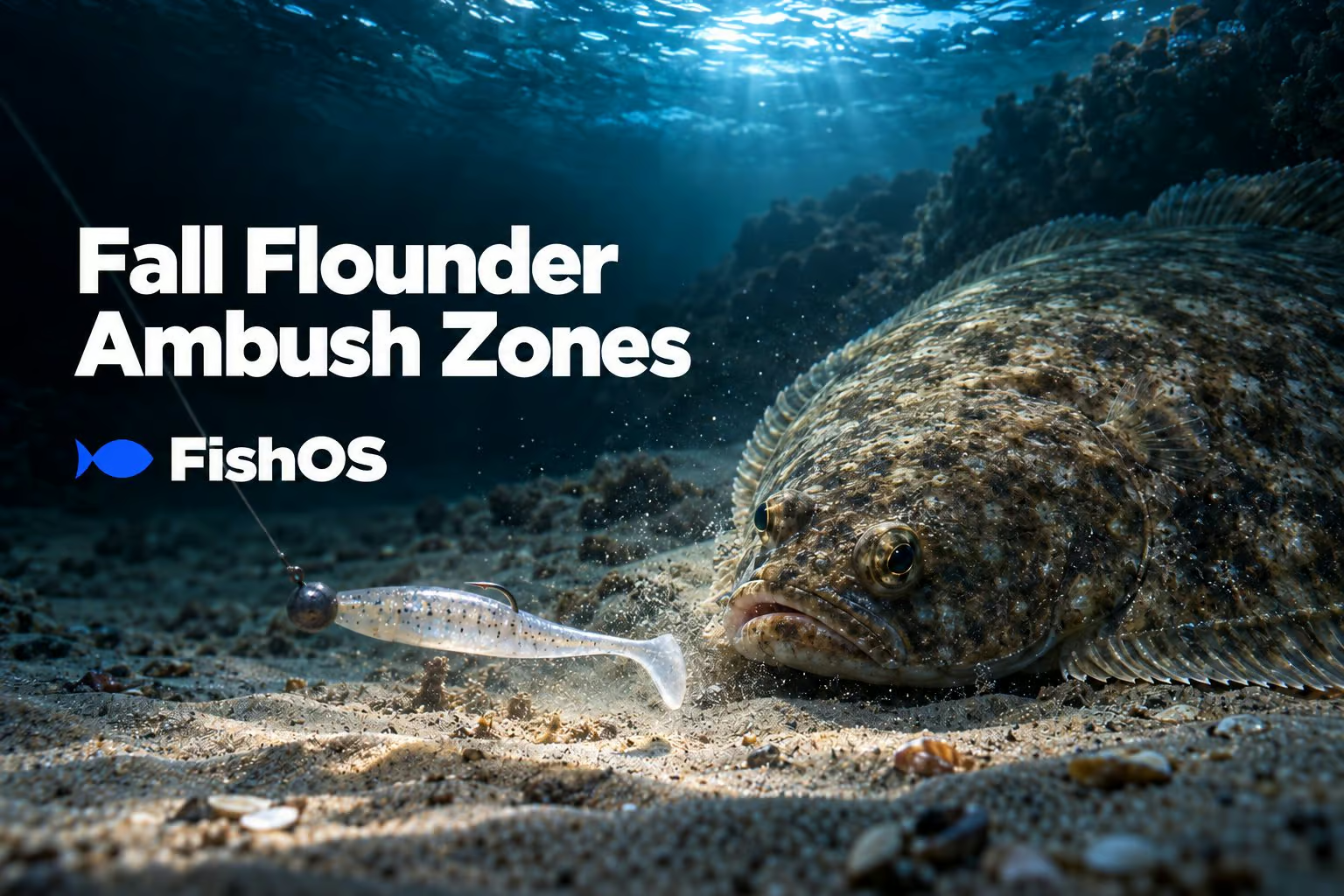
Fall flounder fishing along the Gulf Coast becomes productive when anglers find the shallow feeding areas, drains, passes and staging flats used by migrating fish. Live shrimp, finger mullet and soft-plastic jigs can all work, with the tide, bottom contact and placement along structure determining how each rig performs.
The movement begins with a trickle in early fall, builds during September and October, and sends flounder from bays toward open water. Anglers who work the lower ends of bays early in the migration, shift toward the passes later, then move to offshore rigs as the movement slows can keep pace with the fish.
How does the fall flounder migration progress?
Flounder start leaving the back bays and moving toward the Gulf. According to one guide with about 40 years on Sabine Lake, incoming tides carry fish into bayous, where they feed on shrimp, mullet and shad. As the tide turns and moves out, he fishes the drain at the bayou mouth. Fish also stage near Blue Buck Point before moving toward the pass and the Gulf of Mexico.
The best activity occurs during the fall migration, particularly from September through October. Early in the run, the lower ends of bays that funnel into a pass offer the best placement. October is generally the best month for the passes. As movement slows near the end of October, flounder gather on rigs one to five miles offshore in water 15 to 25 feet deep.
Where do flounder feed and stage?
Flounder are shallow-water feeders that usually take food during moving tides. Throughout most of the summer, they feed at the mouths of the drains on just about any bay. Shallow flats are another common holding area.
Along the Intracoastal Waterway, the flats beside deep drops serve as major staging areas. Backwater estuaries, bayous and marshes also provide productive habitat. Calcasieu Lake and Sabine Lake contain long stretches of shoreline structure, including marsh grass and tall cane. Fish feed in pockets along these edges while pursuing mud minnows, finger mullet, shad and shrimp.
Passes hold fish throughout the year and draw particular attention during the fall run. Sabine Pass is a popular location because Sabine Lake flows into the pass and then through the jetties into the Gulf.
Which structures should anglers target?
Shallow flats, points, bulkheads, pilings and barges all attract flounder. Norris particularly favors pylons in five feet of water that run parallel to the shoreline. Fish commonly hold down-current of the pilings.
A long bulkhead is another dependable structure. Flounder gather against it, allowing anglers to fish soft plastics or an eighth-ounce Road Runner spinnerbait close to the edge. Norris reported catching consistent flounder in the three-to-five-pound class along these bulkheads.
Covering water can increase the number of holding spots an angler reaches. Bill Panto, who fishes passes along the Texas coast, described moving across numerous areas instead of waiting at one location. This approach gives him access to more places where flounder may hold.
What lures and rigs work for fall flounder?
For many situations, Norris uses a soft-plastic jig worked along the bottom. He favors swimbaits in red shad, glow chartreuse and red-and-white, including the Yum Money Minnow. A paddle tail sends out substantial vibration, and the lure can be moved along the bottom at a steady retrieve. He usually places the swimbait on an eighth-ounce Shad Assassin screw-lock jig head because it permits a slower drop.
Buddy Oaks, with Hackberry Rod and Gun Club, said live shrimp and finger mullet work well during the movement from the bay to the Gulf. Soft plastics such as the Hackberry Hustler are also effective.
For working deeper flats along the Intracoastal Waterway, Oaks recommends a Carolina rig. The setup begins with a quarter- to half-ounce egg sinker, followed by a 20-pound-test barrel swivel. Attach 18 to 24 inches of fluorocarbon leader to the swivel, then tie on a 4/0 Kahle hook. Enough weight keeps the bait on the bottom, while a lighter presentation lets the flounder take the bait without immediately feeling the sinker.
How can live bait be fished over the flats?
A slider rig offers another way to present shrimp or mullet. It uses a small float, a two-foot leader, a split shot and a hook. Move the float slowly across the surface, then stop and allow the bait to settle to the bottom. The float should settle naturally instead of being jerked, which can spook flounder.
The rig keeps the bait on bottom while allowing it to roll with the current. When the line tightens, set the hook.
How does shoreline structure guide bait selection?
Pitch a soft-plastic jig into pockets along marsh grass, tall cane and other shoreline structure. A dime-size piece of fresh dead shrimp can be used on the jig. This presentation targets the same shoreline areas where flounder ambush small fish and shrimp.
One recommended combination is a five-inch fat curly-tail grub on a quarter-ounce jig head. A pumpkin body with a chartreuse curly tail has performed well in stained water around places such as East Galveston Bay, Sabine Lake and Calcasieu Pass.
What to do now
- Work the right part of the migration. Fish the lower ends of bays early in the movement, move to the passes during October, and check rigs one to five miles offshore in 15 to 25 feet of water as late-October movement slows.
- Follow the tide. Fish drain mouths as the current reverses and use bays, bayous, shallow flats and marsh edges where flounder feed on moving water.
- Select a bottom presentation. Work a paddle-tail swimbait slowly on an eighth-ounce jig head, pitch a curly-tail jig with fresh dead shrimp into shoreline pockets, or use a correctly weighted Carolina rig.
- Keep the bait on or near the bottom. Use only enough weight to hold bait down in the current while allowing it to roll or drift naturally.
- Watch structure and cover water. Work pilings down-current, fish close to long bulkheads, and continue moving when conditions and water depth change during the run.
FAQ
When is the best time to fish the Gulf Coast flounder fall run?
The run gains strength during September and October. That’s when you want to fish the lower ends of bays that funnel into a pass. During October, it’s usually best to fish the passes. As the migration slows toward the end of October, shift attention to the rigs from 1 to 5 miles off the coast in 15 to 25 feet of water.
What is the best bait for fall flounder fishing?
Live shrimp and finger mullet are effective during the migration. Soft plastics also work, especially paddle-tail swimbaits and curly-tail jigs, while a small piece of fresh dead shrimp can improve a shoreline jig presentation.
Where do Gulf Coast flounder gather in the fall?
Flounder gather near drain mouths, shallow flats, passes, bulkheads, pilings, shoreline pockets and rigs offshore. Staging areas include flats along the Intracoastal Waterway and the mouths of bays that funnel into passes.
Related Coverage
- Fall Fishing: Flounder, Feeding Flocks and Trophy Trout (November 5, 2026): Fall fishing gives anglers three clear approaches: bottom fishing for migrating flounder , working beneath feeding gulls for trout and redfish , and anchoring around predicted solunar feeding windows.
- Hurricane Isaias Nears Major Strength, Heads for Northern Gulf Coast
>>>