About this forecast
This dated forecast was published on October 22, 2026, by the Editorial Staff. It covers Space Coast beaches during November 2026 and draws on seasonal surf-fishing conditions, species availability and guidance from Capt. Lukas Brickweg of Cocoa Beach Surf Fishing Charters. It is a November fishing forecast.
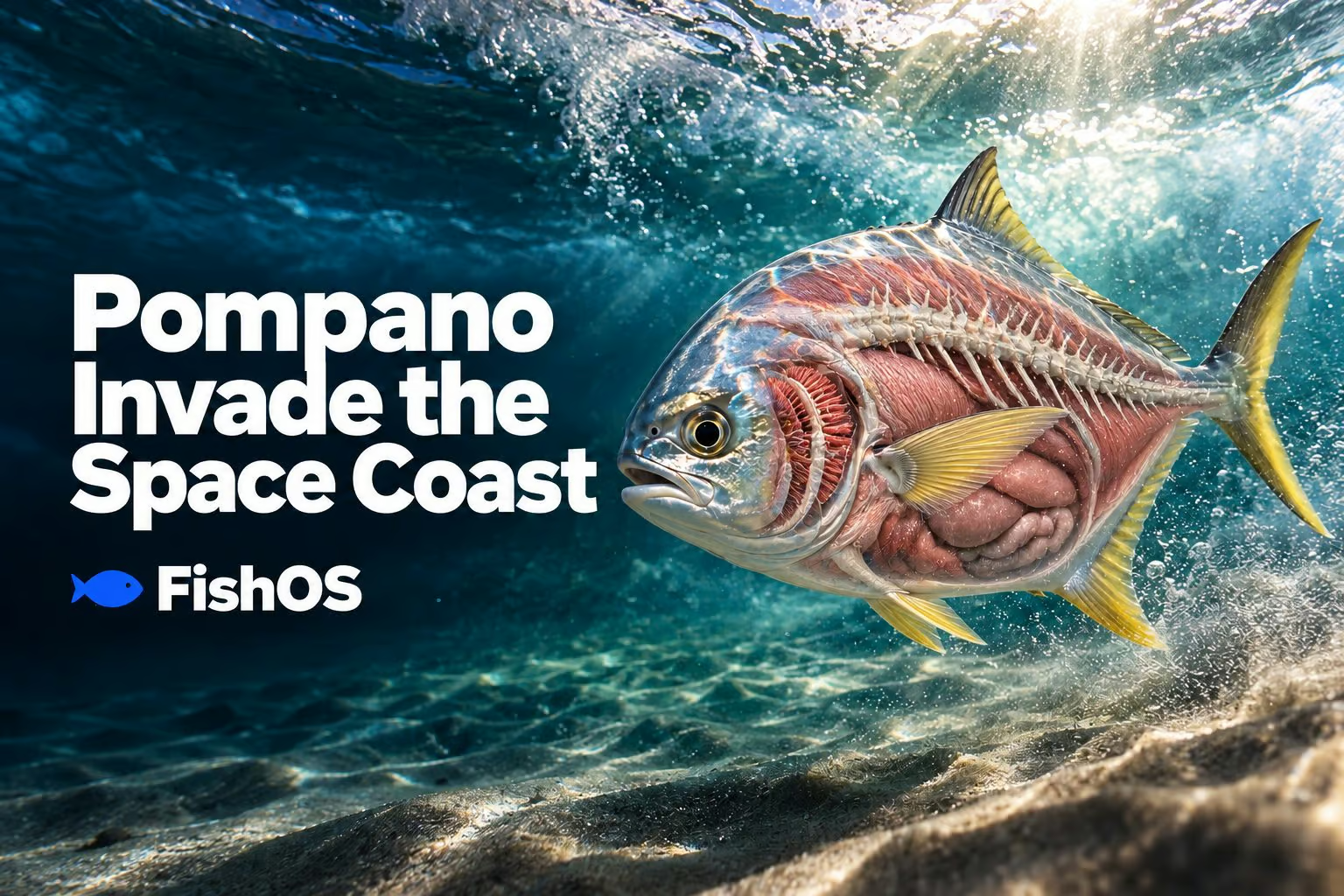
November gives Space Coast anglers a practical route into the winter surf fishery, with pompano, whiting, bluefish and black drum becoming increasingly important as the water cools. Clean green or blue water, cooling ocean temperatures and incoming tides are the main clues for finding feeding fish, while the best casting distance may shift between the first trough and deeper water.
Early in the month, pompano may be scattered along the beach. As temperatures fall and consistent cold fronts arrive, larger schools can move within casting distance. Anglers can improve their odds by matching the rig to the target, testing several distances and moving when wind or sand makes the water less suitable for sight-feeding fish.
What changes in November?
The fall mullet run is winding down, but beach fishing remains active. Pompano becomes the main attraction, while whiting, bluefish and black drum gain importance. Jack crevalle, snook, tarpon and sharks may still provide action, and smaller black drum, croaker and whiting can produce steady bites between periods when pompano are less cooperative.
That week did offer a specific surf-fishing detail. Once conditions improved, his attention shifted toward migrating pompano and larger fish moving south. He was preparing heavier sinkers, thicker leader, shorter drop loops and smaller presentations for the upcoming Maverick’s Ace on the Beach Surf Fishing Tournament.
For safety, the same report noted that strong current and turbulent water can make it difficult to hold bottom. Unusually high tides may also affect low-lying beach and Intracoastal access points. Anglers should check current park notices before traveling and judge each site on the conditions present that day.
Choose your setup
| Target species | Water cue | Rig or lure | Casting range | Tide consideration | Move or stay |
|---|---|---|---|---|---|
| Pompano | Cooling water and clean green or blue water | Double-drop rig with Fishbites and fresh peeled shrimp; keep sand fleas and clam strips ready | Test the first trough and several other distances | Watch for fish entering shallower troughs on the incoming tide | Move if the beach has stirred sand, seaweed and difficult surf |
| Whiting, croaker and smaller black drum | Beach structure and changing depth between sandbars | Shrimp and Fishbites combination | Work different distances until feeding fish are located | Check the first trough and incoming shallows | Stay with productive structure if the surf remains manageable |
| Bluefish and jack crevalle | Baitfish schools near the beach | Swimbait, jig or metal spoon on a seven- to eight-foot spinning rod | Cast around the edge of the school rather than directly into its center | Locate active schools before committing to the area | Move when birds, fleeing bait or surface activity disappear |
| Snook and tarpon | Seasonal nearshore opportunities and baitfish activity | Cut mullet and other appropriate natural baits on heavier tackle | Match the cast to the size and behavior of the target | Follow fish movement near the beach | Move if heavy weather makes the beach unsafe |
How should you read the water?
Clean green or blue water generally favors pompano and other sight-feeding species. A bright float may help when the water is slightly stirred, and sand fleas or clam strips provide alternatives to shrimp and Fishbites.
Do not assume that the longest cast reaches the fish. Pompano and whiting frequently feed close to shore and hold in troughs between sandbars. Working multiple distances allows an angler to find the bite before concentrating on one area. Also track the incoming tide, particularly when fish move into shallower troughs to feed.
How do you find baitfish schools?
Bluefish and jack crevalle can stay active near the beach when baitfish are present. A seven- to eight-foot spinning rod can be rigged with a swimbait, jig or metal spoon. Diving birds, fleeing bait and disturbances on the surface provide visual signs of a school. Casting around the edges may work better than placing the lure directly in the center.
What to do now
- Check the forecast before leaving. Review wind, surf, tides and beach-access notices. A dated weekly report can identify hazardous surf, but conditions may change during the month.
- Pack the standard pompano and shore-fishing options. Bring Fishbites and fresh peeled shrimp for a double-drop rig, plus sand fleas and clam strips. Keep a seven- to eight-foot spinning rod ready for a swimbait, jig or metal spoon.
- Plan to fish several casting distances. Begin near the first trough, then move outward until fish begin feeding. Concentrate on the productive distance rather than committing to a long cast.
- Use the tide as another fishing clue. Pay attention to the incoming tide and shallower troughs where pompano and whiting may feed.
- Leave a rough, unsafe beach for a workable one. Favor cleaner water and manageable surf, and account for rip currents, strong current, erosion and high-tide access issues.
Printable trip checklist
- Weather, surf and tide checked before departure
- Current beach and jetty access notices checked
- Fishbites and fresh peeled shrimp packed
- Sand fleas and clam strips kept in the bait cooler
- Double-drop pompano rig assembled
- Seven- to eight-foot spinning rod with swimbait, jig or metal spoon ready
- Heavier tackle and cut mullet available for larger predators
- Plan to work the first trough and several casting distances
- Move-up beach identified before fishing
- Safety plan set for rip currents, strong current and rough surf
FAQ
What is the best bait for pompano in November?
A standard double-drop pompano rig baited with Fishbites and fresh peeled shrimp is an excellent starting point. Sand fleas, clam strips and bright floats can also be useful.
Where should anglers cast for pompano and whiting?
Both species may feed close to shore and hold in troughs between sandbars. Work different casting distances until you locate feeding fish, rather than relying only on a long cast.
How should anglers respond to rough surf conditions?
Look for beach stretches with cleaner water and manageable surf instead of staying at one location. Strong northeast winds can stir sand and bring seaweed onto the beach.