Fish guide
Black Drum
Pogonias cromis.
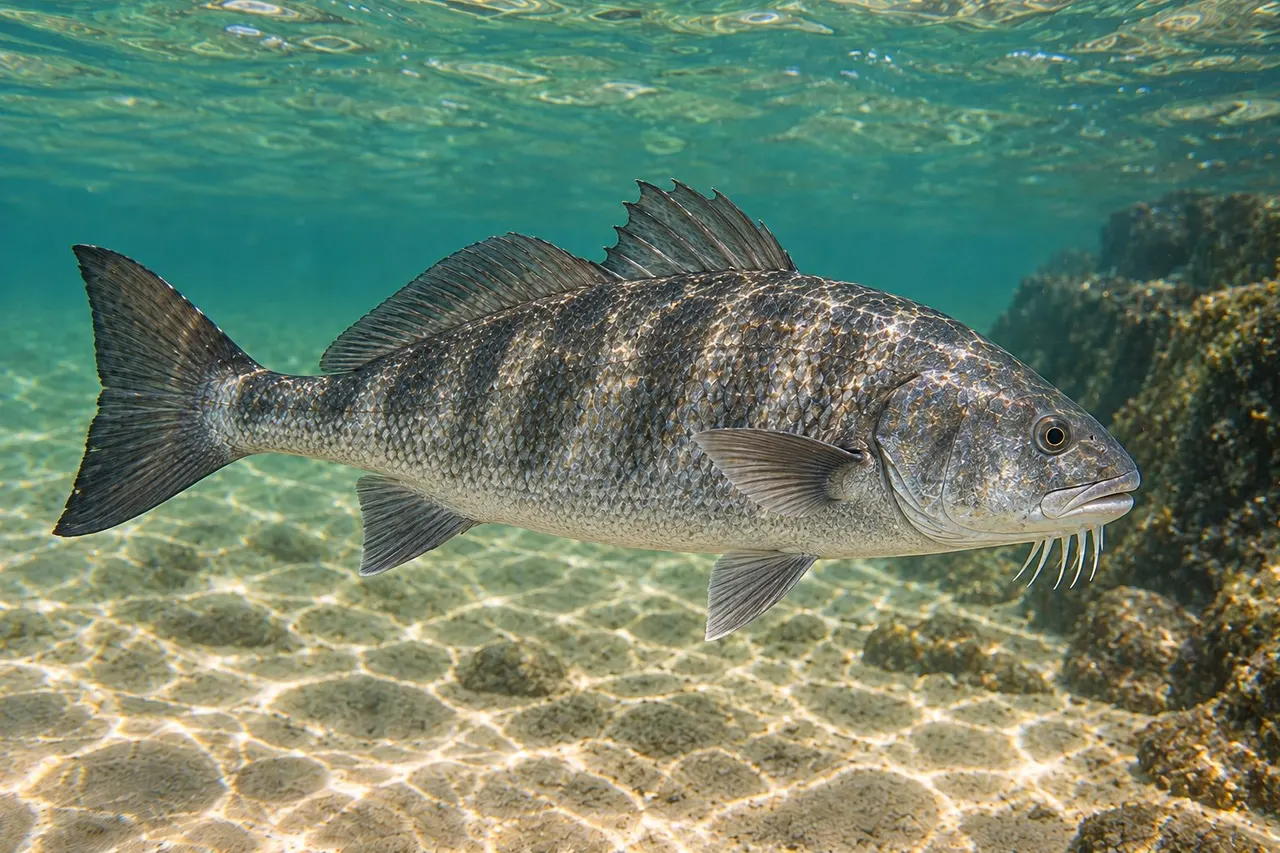
We picked these fish for Virginia Beach and the Chesapeake Bay mouth, VA, the region closest to Columbus, Ohio, based on the approximate location of your internet connection (IP geolocation, looked up on our own server). It is about 436 miles away; FishOS covers the coast from Maine to Florida and the Gulf of America, and adds regions as they are checked. Pick another region if that is not where you fish.
Season in Virginia Beach
Peak months: Apr, May.
Based on our inference.
Season by Region
| Myrtle Beach | JFMAMJJASOND |
|---|---|
| Long Island | JFMAMJJASOND |
| North Jersey | JFMAMJJASOND |
| South Jersey | JFMAMJJASOND |
| Delmarva | JFMAMJJASOND |
| Virginia Beach | JFMAMJJASOND |
| Outer Banks | JFMAMJJASOND |
| Southern NC | JFMAMJJASOND |
| Charleston | JFMAMJJASOND |
| Georgia | JFMAMJJASOND |
| Northeast Florida | JFMAMJJASOND |
| Space Coast | JFMAMJJASOND |
| Southeast Florida | JFMAMJJASOND |
| Southwest Florida | JFMAMJJASOND |
| Tampa Bay | JFMAMJJASOND |
| Big Bend | JFMAMJJASOND |
| Panhandle | JFMAMJJASOND |
| Alabama | JFMAMJJASOND |
| Mississippi | JFMAMJJASOND |
| Louisiana | JFMAMJJASOND |
| Upper Texas | JFMAMJJASOND |
| Middle Texas | JFMAMJJASOND |
| Lower Texas | JFMAMJJASOND |
Where to Find Them
The CBBT, the Cell, Kiptopeke ships, the HRBT and Bay shoals west of Cape Charles (boat or kayak), and the surfside beaches from late March; clams, sand fleas or blue crab.
Bottom, around structure.
What to Look For
Structure with moving water.
Bait
Fresh or peeled shrimp, clams, sand fleas, crab pieces. Fish-finder or double-drop, 2/0 to 5/0 circle, 2 to 4 oz.
Leader
20 to 40 lb.
Common Mistakes
- Fishing away from structure
- Using lures
Landing
Heavy fish; use waves.
Handling
- Crushing throat teeth
- Stout dorsal spines
Keep fingers out of the throat; watch the dorsal spines.
Keep or Release
Smaller drum eat well; big drum are better released. Check VMRC rules.
Keep It Fresh
Kill it right away, then bleed it and get it on ice, to keep the fillet at its best.
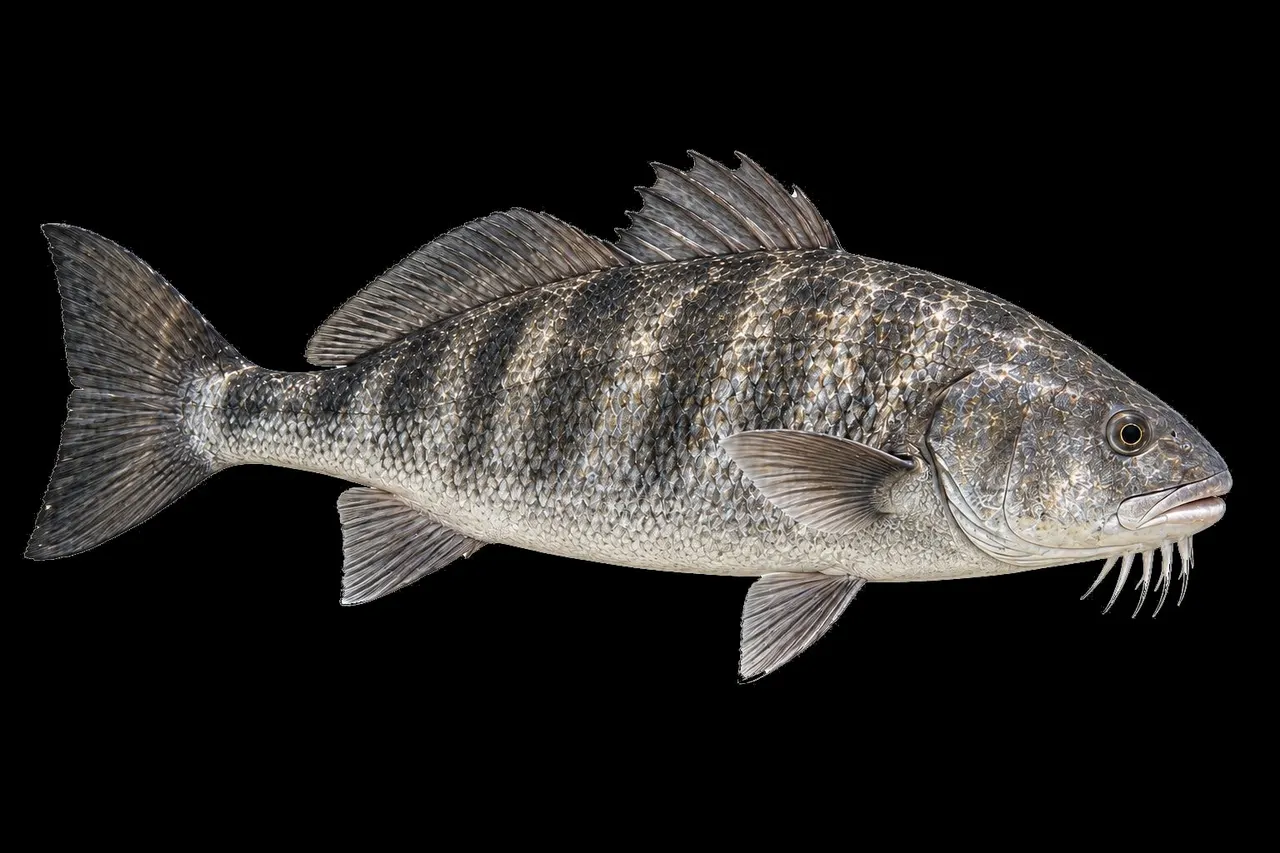 Spike Here
- Kill It Right Away. Spike the brain or give a firm knock to the head as soon as it is landed, then bleed it and put it in an ice slurry. To spike it, push the spike into the brain at the marked spot at about a 30 degree angle.
- Bleed It. Cut through the gills on both sides where they join the collar, or cut across the throat between the gill covers. Let it bleed into a bucket of seawater for about a minute, longer is fine.
- Ice It. Once it has bled out, put it in an ice slurry: crushed ice or cubes with a little water.
- Walking the Beach. Bleed it on the spot even when the cooler is back at the car, then get it on ice as soon as you can.
- At the Cleaning Table. Rinse the fillets in clean saltwater. It washes off the last of the blood and firms up the flesh.
Size
Typical: Over 50 lb fish common in the spring run. Largest Chesapeake fish 111 lb, off Cape Charles (1973).
Limits
FishOS has not checked the VA limits yet. Check the size, bag and season rules with the Virginia Marine Resources Commission before you keep a fish.
Sources
- Maryland DNR Fish Facts: Black Drum (Official source)
- VMRC Virginia Saltwater Fishing Tournament: 2024 Citations Year To Date (every trophy citation with species, catch date, area, technique) (Official source)
- VMRC Virginia Saltwater Fishing Tournament: 2025 Citations Year To Date (printed May 8 2026) (Official source)
- ASMFC 2017, Atlantic Sciaenid Habitats (Habitat Management Series 14): Black Drum chapter (Official source)
- SCDNR species profile: black drum (Official source)
Is Black Drum Worth It Today?
The planner rates it for your exact time with the live tide, weather and water temperature.
Create Your Account