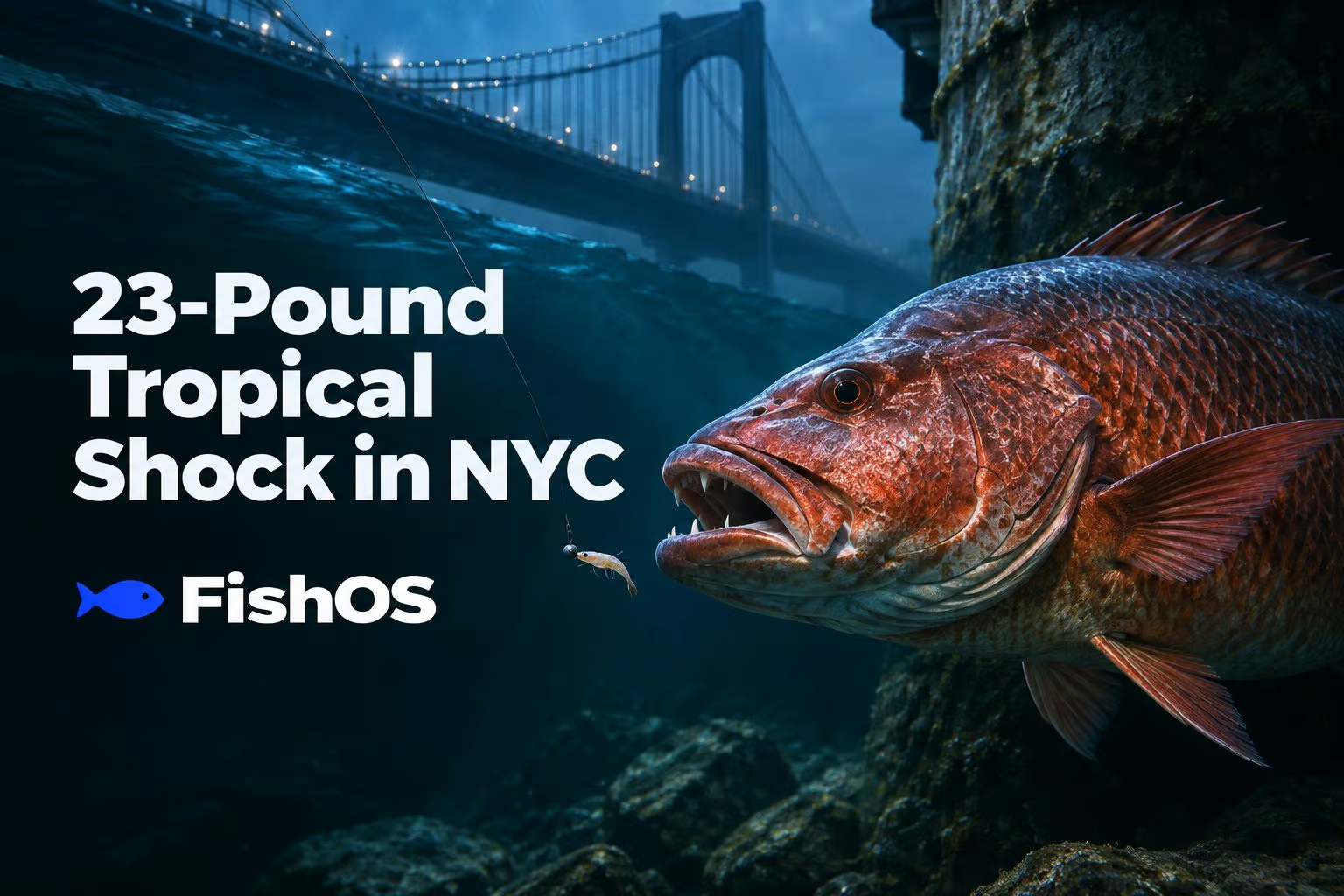
Anglers fishing for blackfish beneath New York’s Verrazzano-Narrows Bridge caught a rare cubera snapper on an ice-fishing jig, providing a striking example of a tropical species appearing in Northeast waters.
What Happened Beneath the Verrazzano Bridge?
Vitello and Iljazi were targeting tautog, also called blackfish, beneath the bridge when the catch unfolded. According to Vitello, the tide had just slacked, and Iljazi pitched an ice-fishing jig tipped with a shrimp tail into shallow rock structure near the bridge’s concrete pilings.
The fish took the bait shortly afterward, but the anglers initially had trouble identifying it. They considered a large striped bass or a foul-hooked black drum. The mystery fish eventually surfaced broadside, and the pair recognized the difference after getting it into the boat and seeing its teeth.
Vitello and Iljazi photographed the fish, searched for identification and called Mark Fuduli at Tackle World in Paramus, New Jersey. Fuduli identified it as a cubera snapper.
How Large Was the Fish?
The cubera snapper weighed 22.99 pounds and measured 35 inches long. Vitello and Iljazi took it to a nearby ShopRite because it was open and had a scale, according to Vitello.
The fish caught beneath the bridge was a larger juvenile. Its position around shallow rock piles near the bridge’s concrete pilings gave it access to abundant fish and crabs.
Why Was the Catch so Unlikely?
The cubera snapper is the largest snapper species in the world. Its normal range extends from Brazil to Massachusetts, although it is considered a rare visitor to Northeast waters, according to Cubera Snapper – Discover Fishes. Anglers in the region sometimes encounter other tropical fish between July and November, including tarpon and barracuda.
Adult cuberas are solitary reef-dwelling fish and strong predators. They use large canine teeth to seize and crush lobsters, crabs and bony fish. The Northeast catch was especially unusual because the anglers landed it with an ice-fishing jig and 8-pound-test mainline.
What Does This Mean on the Water?
The catch may demonstrate that Northeast anglers can encounter fish far outside the species normally expected in local water. Iljazi used an ice-fishing jig and 8-pound-test mainline while fishing shallow rock structure where the larger juvenile had positioned itself to feed.
The tide had just slacked, and the anglers were targeting shallow rock structure close to the bridge. It was getting dark, but once they got the fish in the boat and saw the teeth, they knew it was not a drum, Vitello said.
Adult cubera snappers are voracious predators that use their large, pronounced canine teeth to clamp down on and crush lobsters, crabs and bony fishes.
What to Do Now
- Remain prepared for unexpected species. Northeast waters can produce tropical visitors from July through November, including tarpon, barracuda and cubera snapper.
Is Cubera Snapper Safe to Eat?
Juvenile cubera snapper are popular table fare in southern areas because of their mild, flaky white meat. Vitello described the taste of the 22.99-pound fish as "Fabulous."
Florida and federal waters have a 12-inch minimum size limit for keeping the species.
FAQ
Where Was the Rare Cubera Snapper Caught?
Dzengis Iljazi and Todd Vitello caught it beneath New York’s Verrazzano-Narrows Bridge in late October 2026 while fishing for blackfish.
How Big Was the Cubera Snapper?
The fish weighed 22.99 pounds and measured 35 inches long.
What Tackle Was Used to Catch the Cubera Snapper?
Iljazi used an ice-fishing jig tipped with a shrimp tail and 8-pound-test mainline while fishing shallow rock structure.