Fish guide
Summer Flounder
Paralichthys dentatus. Also called Fluke, Flounder.
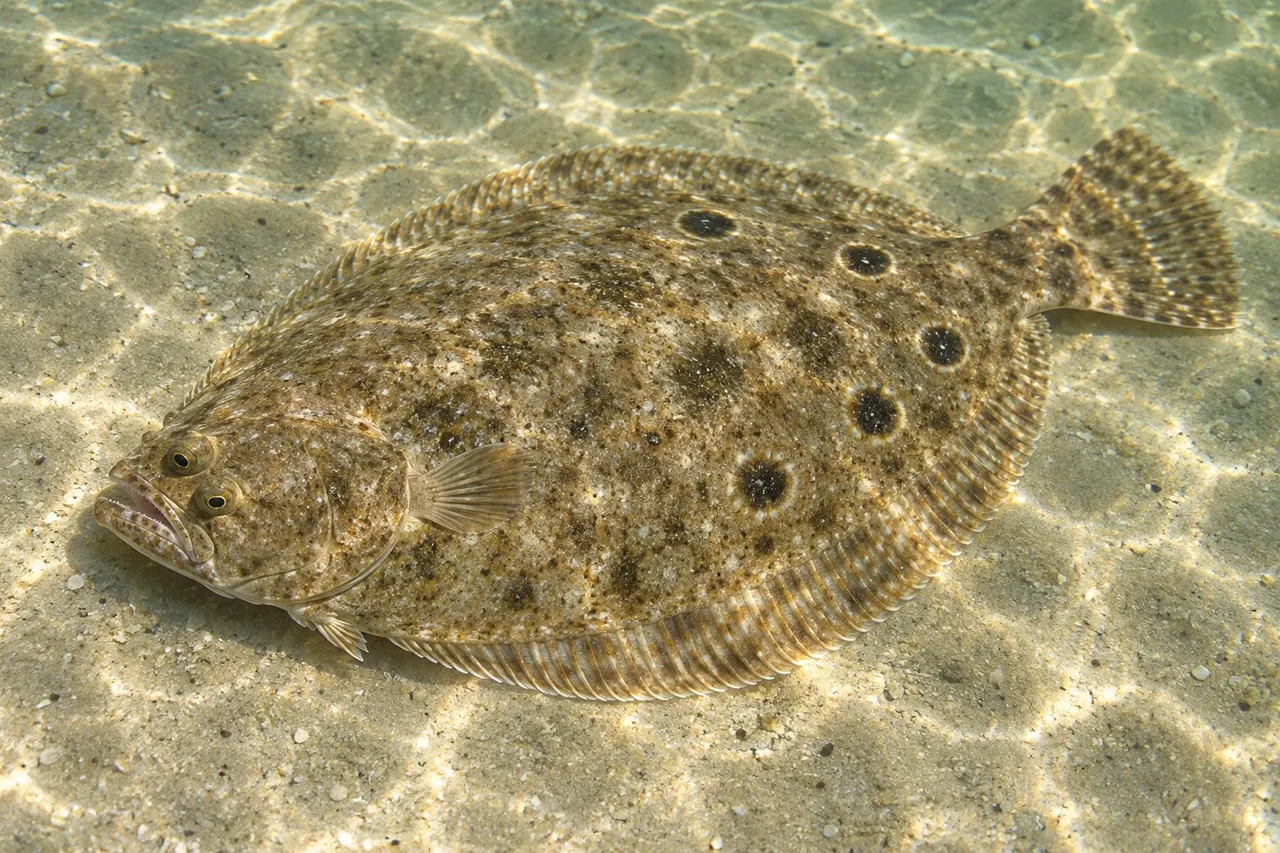
Showing the fish for Myrtle Beach and the Grand Strand, SC.
Season in Myrtle Beach
SCDNR: less abundant in SC than southern flounder; may overwinter in estuaries or deeper nearshore water, spawns offshore November to February, returns inshore in spring. (Our inference)
Season by region
| Myrtle Beach | JFMAMJJASOND |
|---|---|
| Long Island | JFMAMJJASOND |
| Cape Cod | JFMAMJJASOND |
| Rhode Island | JFMAMJJASOND |
| Connecticut | JFMAMJJASOND |
| North Jersey | JFMAMJJASOND |
| South Jersey | JFMAMJJASOND |
| Delmarva | JFMAMJJASOND |
| Virginia Beach | JFMAMJJASOND |
| Outer Banks | JFMAMJJASOND |
| Southern NC | JFMAMJJASOND |
| Charleston | JFMAMJJASOND |
Where to find them
Jetty walls, inlet mouths and nearshore reefs; casts with the current along the rocks.
On the bottom along jetty walls, inlet edges and trough edges.
What to look for
Five large eyespots on the back half of the body tell it from southern flounder (no distinct spots) and Gulf flounder (three spots).
What to throw
Bait
Live mud minnows (spring), Live finger mullet (as water warms). Carolina rig: 3/4 to 1 1/2 oz egg sinker, about 12 in leader, No. 2 to 1/0 hook; let the current move it.
Leader
About 12 in of leader on a Carolina rig.
Common mistakes
- Setting the hook too fast on live bait
- Reeling the bait along instead of letting the current move it
Landing
Net it; do not lift a flounder by the line.
Handling
- Sharp teeth
Use pliers to unhook.
Keep or release
16 in TL minimum, 5 per person per day (10 per boat), shared with southern and Gulf flounder. North Carolina rules apply north of the state line.
Typical: About 15 in, 1.5 lb. Large: unknown. SC record 3 lb 8 oz (1982, as SCDNR lists it).
South Carolina limits
- Minimum: 16 in TL
- Maximum: none
- Bag: 5 per person per day
- Boat: 10 per boat per day
- Season: Open year-round
- In effect since July 1, 2021
- North Carolina rules apply north of the state line (Little River / Hog Inlet area)
- Covers southern, summer and Gulf flounder
Last checked 2026-10-11. A summary, not legal advice; the official rules win. SC Department of Natural Resources fishing regulations.
Sources
- SCDNR species profile: summer flounder (Official source)
- NWS Wilmington: Myrtle Beach water temperature by month (Springmaid Pier, 2005-2025) (Official source)
- NOAA Technical Memorandum NMFS-NE-151: summer flounder essential fish habitat (Official source)
- SC finfish size and catch limits 2026-2027 (eRegulations, linked from SCDNR), last updated Aug 11, 2026 (Official source)
Is summer flounder worth it today?
The planner rates it for your exact time with the live tide, weather and water temperature.
Create your account