Fish guide
Hickory Shad
Alosa mediocris. Also called Hickories.
Showing the fish for Delaware, Maryland and Virginia ocean coast.
Season in Delmarva
The Fisherman: shad, including hickory shad, at Indian River Inlet in spring on the incoming tide, on shad darts often behind a Stingsilver; FishTalk: catch-and-release shad at the Ocean City south jetty on small gold spoons, outgoing tide. Spring months inferred. (Our inference)
Season by region
| Cape Cod | JFMAMJJASOND |
|---|---|
| Rhode Island | JFMAMJJASOND |
| Connecticut | JFMAMJJASOND |
| Delmarva | JFMAMJJASOND |
Where to find them
Indian River Inlet on the incoming tide in spring; the Ocean City south jetty tip on the outgoing tide.
Usually close to shore, so long casts are rarely needed; feeds show as fish jumping and rolling on bait pods (OTW).
What to look for
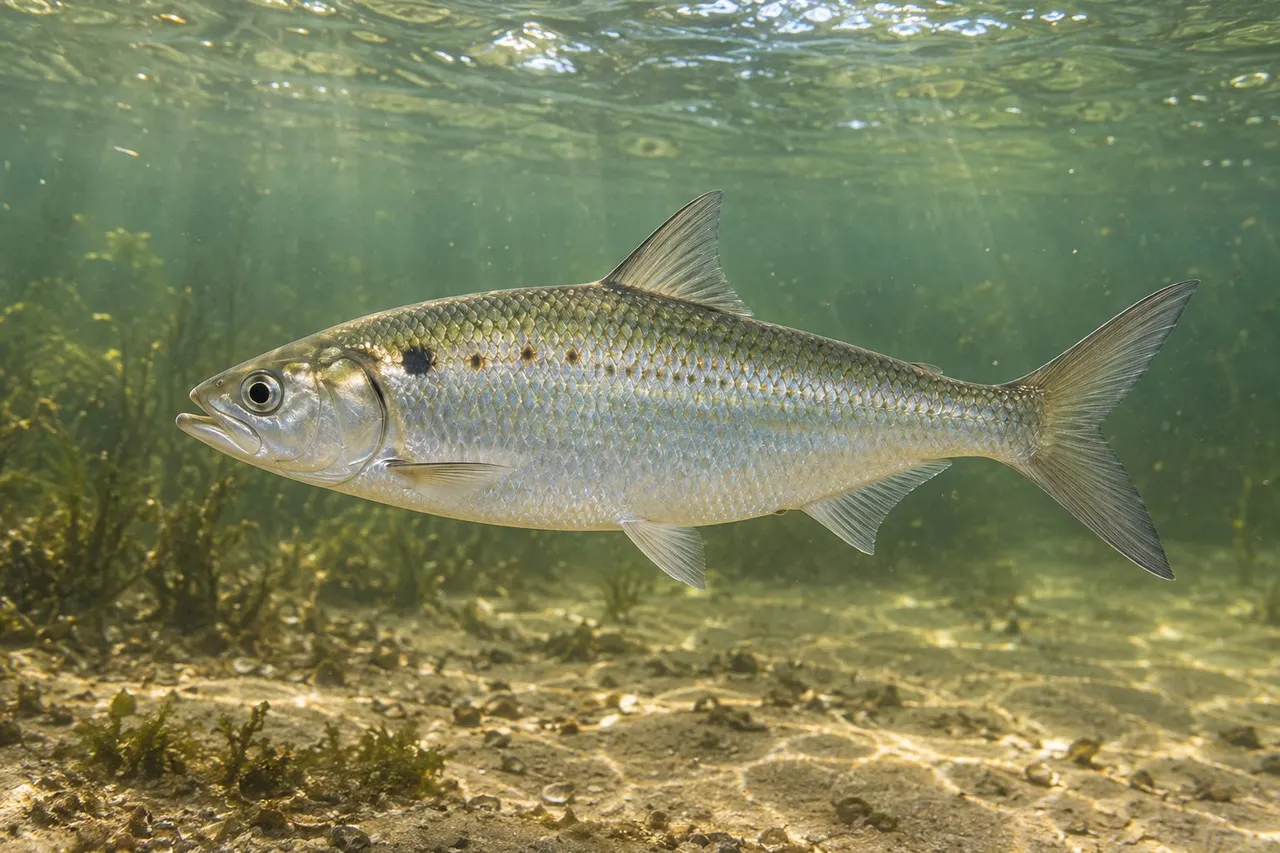
Herring-shaped fish with a strongly projecting lower jaw, one dark shoulder spot followed by several faint ones, dark green-gray back and silver sides (CT DEEP). Schools jump and roll on bait.
What to throw
Leader
Light tackle: one writer uses a 7 to 8 ft soft-tipped rod rated to about 1 oz with a 3000-size reel and 20 lb braid; the lighter the tackle, the more fish landed (OTW 2025).
Common mistakes
- Horsing the fish: their paper-thin mouths tear and the hook pulls (OTW)
- Tackle too heavy to enjoy or land them
Landing
Keep light, steady pressure through the jumps; net it if you can.
Handling
No hazards noted in the sources read.
Keep or release
Catch and release is the practice reported at Ocean City; check state shad rules.
Typical: Commonly 15 to 20 in (CT DEEP); most 1 to 2 lb (OTW). Large: Largest reported 24 in (CT DEEP). Connecticut state record 2 lb, 18 in (CT DEEP).
Limits
FishOS has not checked the DE and MD and VA limits yet. Check the size, bag and season rules with the Delaware DNREC Fish and Wildlife before you keep a fish.
Sources
- The Fisherman: Delaware Surf, Small Wonder, Big Options (Angler knowledge)
- FishTalk Magazine: fishing the Ocean City, MD inlet hotspots (Angler knowledge)
- CT DEEP: Hickory Shad (Freshwater Fishes of Connecticut) (Official source)
- On The Water: Hickory Shad, The Unsung Heroes of the Fall Run (Matt Haeffner, 2025) (Angler knowledge)
- On The Water: Spring Stripers and Hickory Shad on the Fly (Michael Mulvaney, 2022) (Angler knowledge)
Is hickory shad worth it today?
The planner rates it for your exact time with the live tide, weather and water temperature.
Create your account