Fish guide
Gag
Mycteroperca microlepis. Also called Gag grouper, Gray grouper.
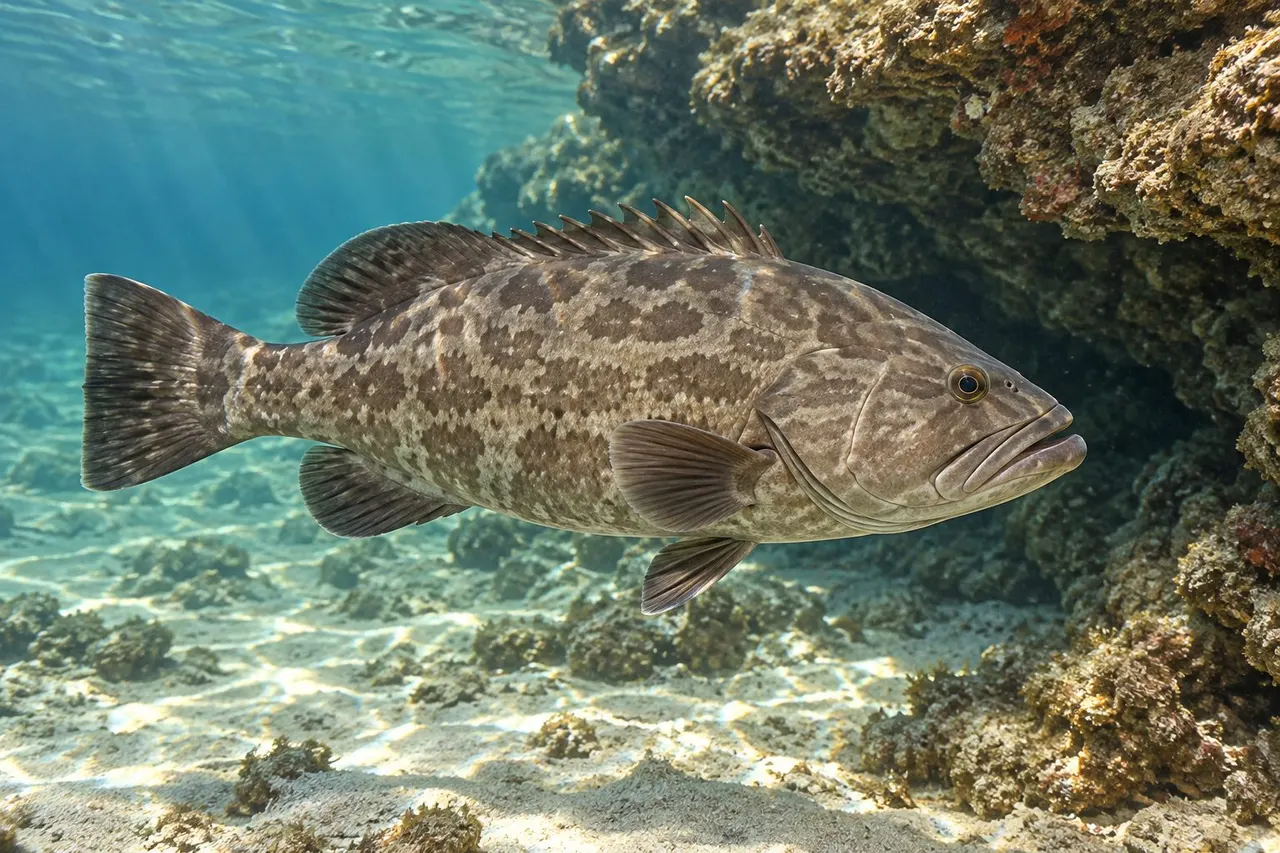
Inshore gag here are juveniles; the adult fishery is on reefs about 15 to 20 miles off St. Augustine (Florida Sportsman), beyond shore and nearshore range. Release juveniles.
Showing the fish for Northeast Florida, Jacksonville to Flagler.
Season in Northeast Florida
FWC: juvenile gag live in inshore seagrass beds; adults on offshore rocks and reefs. Off St. Augustine the gag fishery is on 65 to 80 ft reefs about 15 to 20 miles out, from late February or March into summer (Bolin, Florida Sportsman), which FishOS does not chart. Inshore months follow the juvenile pattern. (Our inference)
Season by region
| Charleston | JFMAMJJASOND |
|---|---|
| Georgia | JFMAMJJASOND |
| Northeast Florida | JFMAMJJASOND |
| Florida Keys | JFMAMJJASOND |
| Tampa Bay | JFMAMJJASOND |
| Big Bend | JFMAMJJASOND |
Where to find them
Rocky bottom, ledges, reefs and wrecks; juveniles around docks, oyster beds and grass in the estuary.
On the bottom near rock, ledges, reefs and wrecks; adults in groups of 5 to 50 or alone (Florida Museum).
What to look for
Ledges and hard bottom on the depth finder.
Bait
Live pinfish, Live pogies (menhaden), Live mullet, Pigfish, Cigar minnows, Threadfin herring, Grunts. .
Leader
Common mistakes
- Keeping small inshore gag; they are juveniles
Landing
Turn the fish up quickly before it reaches cover.
Handling
Unhook with pliers; release undersized fish quickly.
Keep or release
Inshore gag along the Atlantic coast are usually juveniles; release them. Rules differ by state and by federal season; see the regulations file. Florida Museum notes ciguatera has been reported but is very rare.
Typical: unknown. Large: More than 3 ft and up to 50 lb (NOAA); maximum 4.75 ft and 80.5 lb (Florida Museum).
Limits
FishOS has not checked the FL limits yet. Check the size, bag and season rules with the Florida Fish and Wildlife Conservation Commission before you keep a fish.
Sources
- Florida FWC: Where to Saltwater Fish (species and seasons by county, Nassau to Monroe) (Official source)
- NOAA Fisheries: gag grouper (Official source)
- Florida Sportsman (Frank Bolin, 2011): gag grouper on the 80 ft reefs off St. Augustine (Angler knowledge)
- Florida Museum, Discover Fishes: gag grouper (Official source)