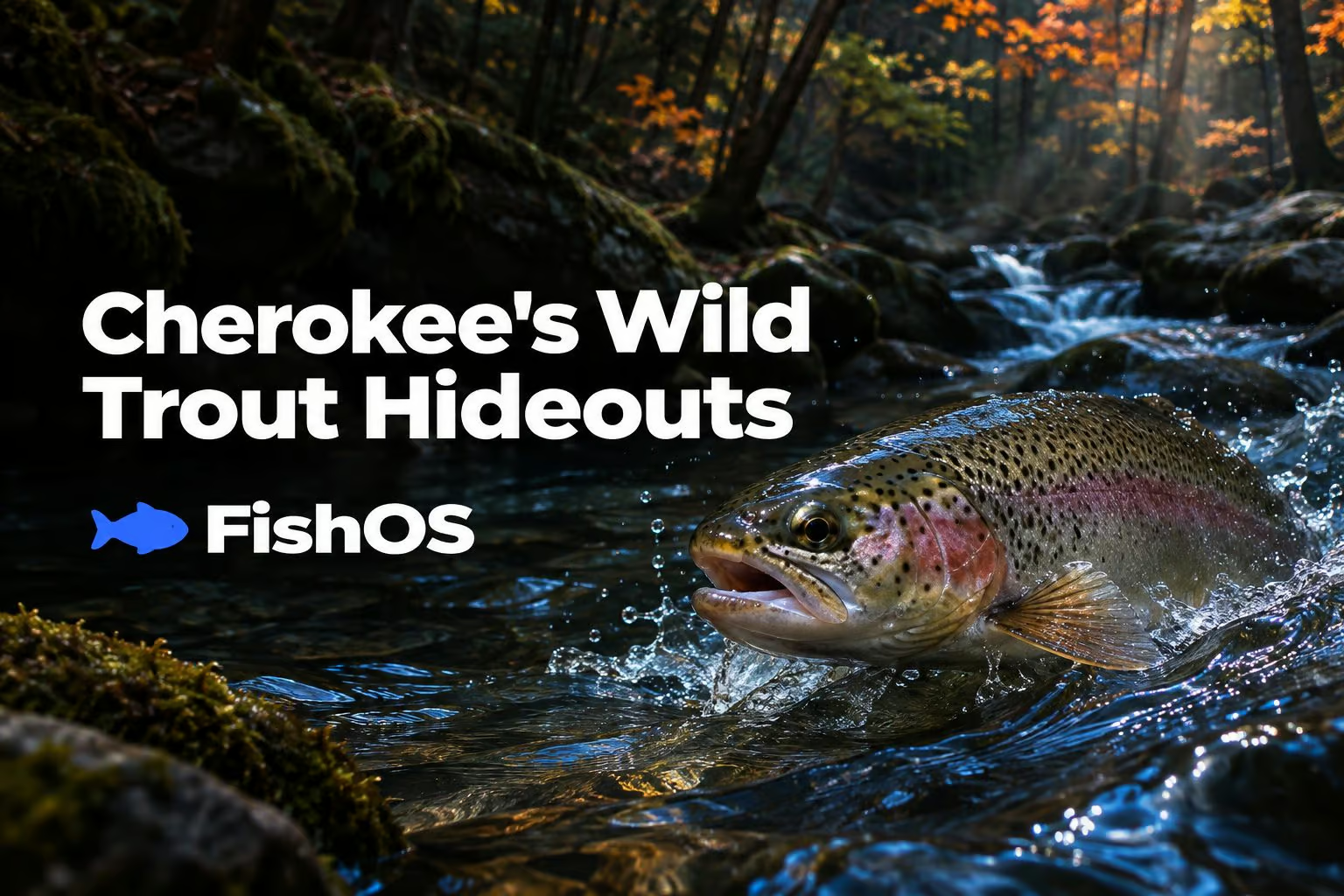
Quick Answer
Trout fishing in Cherokee National Forest offers two distinct routes: Cosby Creek provides roadside access to stocked rainbows below Great Smoky Mountains National Park, while Citico Creek combines stocked lower sections with self-sustaining trout in its upper forks. The forest covers 650,000 acres.
Cherokee National Forest divides into 650,000 acres of public land in Tennessee, with the Great Smoky Mountains National Park separating Cosby Creek from Citico Creek.
Cosby Creek: Roadside Access and Stocked Rainbows
Lower Cosby Creek lies outside Great Smoky Mountains National Park and does not require a park fishing permit. Several bridges and pull-offs along Highway 32 provide access to water that can be reached from shore or by wading. The lower creek has rocky, slick streambeds, boulder pockets, and undercut banks, so footing requires care.
The lower reaches receive regular stocking from the Tennessee Wildlife Resources Agency (TWRA). The available fishing guide identifies spring and fall as productive periods and lists stocked rainbows with occasional brown trout in these lower stretches. The section inside the park near Cosby Campground offers bank fishing and light wading near trails and picnic areas, but park rules apply there.
What Are the Official Details for Cosby Creek?
| Detail | What is established | Source |
|---|---|---|
| Location and access | Cosby Creek continues below the park boundary through the Cosby community, with bridges and pull-offs along Highway 32. | Fishing guide |
| Stocking | Lower Cosby Creek is regularly stocked by TWRA. | TWRA, Tennessee Wildlife Resources Agency |
| Species | Stocked rainbows and occasional brown trout are expected in the lower creek; brook trout occupy upper reaches and rainbows hold in deeper pools below. | Fishing guide |
| Terrain | Lower Cosby has a rocky, slick streambed with boulders and undercut banks. | Fishing guide |
| Park permit | Lower Cosby Creek lies outside Great Smoky Mountains National Park and does not require the park fishing permit. | National Park Service fishing rules |
Citicо Creek: Stocked Lower Water and Remote Upper Forks
Citicо Creek drains more than 20,000 acres on the western edge of Cherokee National Forest. Its north and south forks rise in the Unicoi Mountains, and the Cherohala Skyway follows the southern edge of the watershed. The lower water is regularly stocked from Little Citico Creek to the Citico Creek Wilderness boundary, while the upper forks hold self-sustaining rainbows and browns.
The Forest Service identifies Citico Creek as one of the more popular stocked trout streams in Cherokee National Forest.
What Are the Official Details for Citico Creek?
| Detail | What is established | Source |
|---|---|---|
| Location | Citicо Creek drains more than 20,000 acres, with north and south forks rising in the Unicoi Mountains. | Fishing guide |
| Stocking | TWRA regularly stocks the creek from Little Citico Creek to the Citico Creek Wilderness boundary. | TWRA, Tennessee Wildlife Resources Agency |
| Species | Rainbow and brown trout have self-sustaining populations in the upper forks. | Fishing guide |
| Access | Citicо Creek is listed among the Forest Service’s most popular stocked trout streams. | Cherokee National Forest fishing information |
| General trout information | Rainbow trout averaging 8 to 12 inches are stocked in many forest streams, generally from March through September; wild rainbows, browns, and native brookies occur in many mountain streams above 1,000 feet. | Cherokee National Forest fishing information |
How Do Cosby and Citico Creek Compare?
| Category | Cosby Creek | Citicо Creek |
|---|---|---|
| Best fit | Anglers seeking close roadside access and regularly stocked lower water | Anglers choosing between a stocked lower section and remote upper forks |
| Trout source | Stocked rainbows with occasional brown trout; brook trout in upper reaches | Stocked lower water and self-sustaining rainbows and browns in upper forks |
| Access | Bridges and pull-offs along Highway 32; bank fishing and light wading near Cosby Campground | Easier lower access and more demanding upper-fork access |
| Terrain | Rocky, slick streambeds with boulders and undercut banks | North and south forks rising in the Unicoi Mountains |
| Governing rules | State rules below the park; National Park Service rules inside the park | State and federal land rules apply according to the section being fished |
| Water and tackle | Use 6X or 7X tippet and longer casts in clear, low water | Review current conditions before selecting a remote access point |
Which Rules Apply Inside Great Smoky Mountains National Park?
Anyone fishing inside the park must use one hand-held rod with artificial flies or single-hook lures. Up to two flies may be attached to a leader. Fishing is permitted from 30 minutes before sunrise until 30 minutes after sunset. Brook, rainbow, and brown trout have a seven-inch minimum size, and fish bait, liquid scents other than artificial flies or lures, and double, treble, or gang hooks are prohibited.
Residents and nonresidents age 16 or older need a valid fishing license or permit from Tennessee or North Carolina. No trout stamp is required. The park does not sell licenses or permits, so anglers must obtain one before entering the park. These rules come from the National Park Service.
How Do Fall Conditions Affect Tackle Choices?
Early fall conditions favor terrestrial insects. For November, the available guide suggests blue-winged olives, midges, and caddis emergers. Clear, low water calls for 6X or 7X tippet and longer casts. Drifting leaves can snag line, so anglers can target deeper pools below riffles where trout hold under cover. Fishing often improves around mid-morning as the water begins to warm after cooler nights.
These are conditional choices rather than fixed rules. Check the insects present, water clarity, flow, and target depth at the selected pool before committing to a pattern or leader.
What Does the Park Science Tell Us About These Creeks?
The National Park Service reports that Great Smoky Mountains National Park contains just over 2,900 miles of cold- and cool-water streams. About 20 percent are large enough to support trout populations. Rainbow trout occupy 15.2 percent of park streams, brook trout 8.6 percent, and brown trout 4.6 percent.
Park biologists monitor fish populations annually. Their backpack electrofishing method isolates a 100-meter section and samples it three times, typically removing 60 to 70 percent of the fish present. The survey data show brook and rainbow trout generally live three to four years and reach a maximum size of 9 to 12 inches. Brown trout live longer and grow larger after switching to a mostly fish-based diet at about eight inches.
These are park-wide findings rather than creek-specific population counts. They describe the monitoring method and general biology of trout within Great Smoky Mountains National Park; they do not establish the number of fish in either Cosby Creek or Citico Creek. For practical habitat planning, the National Park Service also notes that warm summer water temperatures raise trout metabolic rates in low-productivity streams, while brook trout habitat occupies upper elevations and can be affected by reduced stream pH from acid deposition. See the park’s trout population dynamics data.
What Is Known About Brook Trout Restoration?
Brook trout are native to the Tennessee-Appalachian region and are generally smaller than the other trout discussed in the fishing guide. The U.S. Fish and Wildlife Service gives them an adult length of about six to eight inches. Tennessee Aquarium Conservation Institute, TWRA, Trout Unlimited, and the U.S. Forest Service have worked to restore brook trout habitat and populations in southeastern Tennessee.
The conservation program uses strip spawning to raise young fish before releasing them into native streams. Releases have included as many as 1,000 brook trout, and TWRA monitors the streams annually with electrofishing. The program is currently on hold after Hurricane Helene affected habitat conditions in September 2024, with partners reassessing aquatic life in affected streams.
What to Do Now
- Check current creek closures, access status, and stocking information for the selected section.
- Confirm the required license or permit for the exact location, including whether the route enters Great Smoky Mountains National Park.
- Review the tackle rules for the park boundary and the current Tennessee fishing regulations.
- Check flow, water clarity, and local restrictions before leaving.
- Inspect bank conditions, footing, and wading hazards before entering the water.
- Contact TWRA or the Forest Service about remote access and ask for an alternate approach if the planned route is blocked.
Check time-sensitive closures, access, and regulations again on departure day.
Key Considerations
- Lower Cosby Creek and the Cosby Campground section have different permit requirements because they fall on opposite sides of the park boundary.
- Citicо Creek’s upper forks contain self-sustaining rainbows and browns, but the available information does not provide creek-specific fish counts.
- Park-wide population statistics describe monitoring and trout biology within Great Smoky Mountains National Park, not current fish abundance in Cosby Creek or Citico Creek.
- Brook trout restoration and stocking are separate programs; a stocking announcement does not by itself establish that a particular reach contains wild trout.
- Fall fly, tippet, and timing suggestions depend on insects, flow, clarity, and cover observed at the chosen pool.
FAQ
Does Fishing Cosby Creek Require a Great Smoky Mountains National Park Permit?
No. Lower Cosby Creek lies outside the park boundary and does not require the park fishing permit. A valid license or permit is required for fishing inside the park.
Does Citico Creek Have Wild Trout?
Yes. Self-sustaining rainbow and brown trout populations are present in the upper forks of Citico Creek.
When Is Fall Trout Fishing Most Productive at Cosby Creek?
The available fishing guide identifies spring and fall as productive periods for lower Cosby Creek, where trout are regularly stocked.
What Tackle Is Allowed in Great Smoky Mountains National Park?
The park allows one hand-held rod, artificial flies or single-hook lures, and up to two flies on a leader. Double, treble, and gang hooks are prohibited.
When Are Licenses Required for Fishing in the Park?
Residents and nonresidents age 16 or older need a valid fishing license or permit from Tennessee or North Carolina. No trout stamp is required.