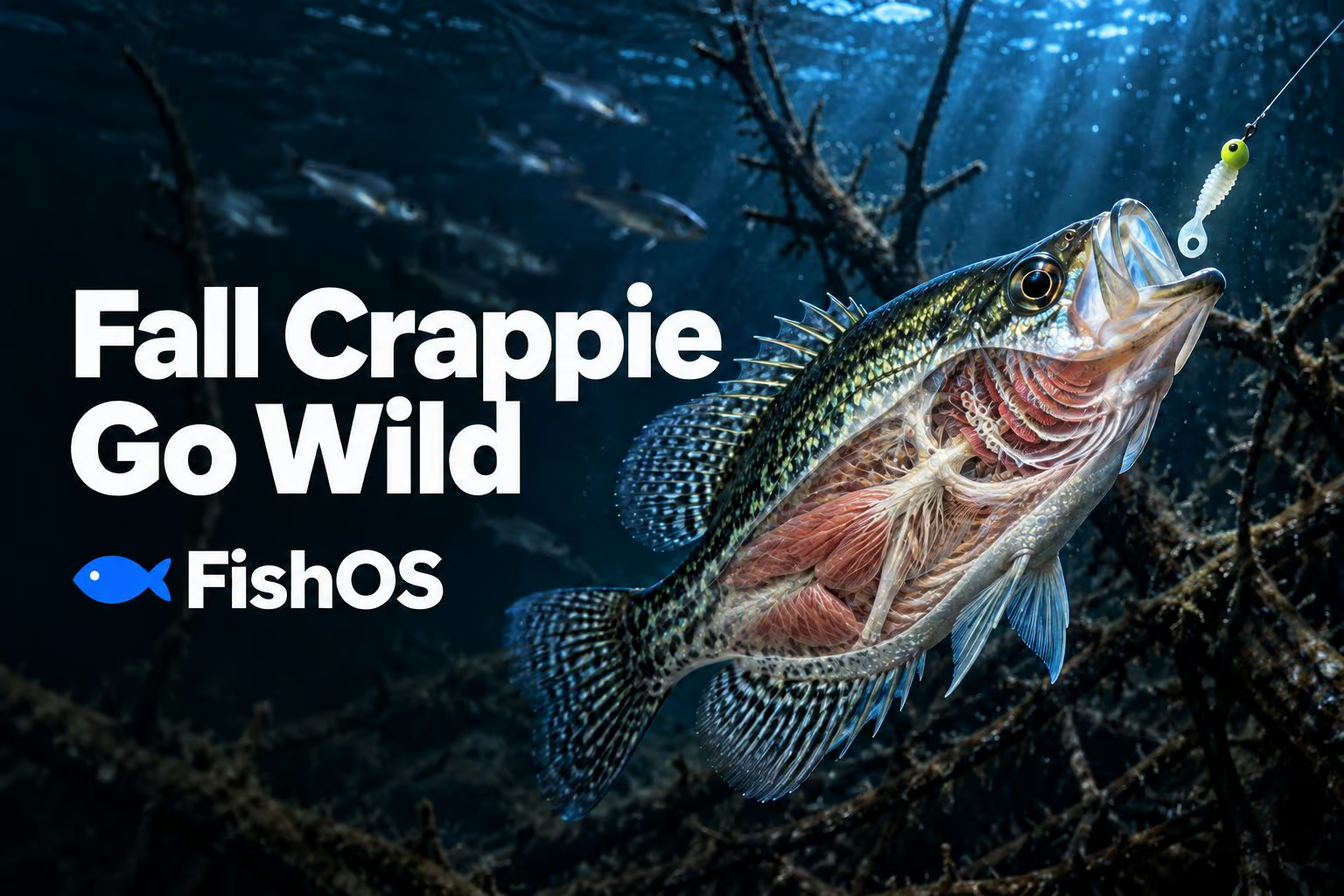
Fall crappie fishing gives anglers a clear target: find cooler water, follow the baitfish and work active schools around channels, brush, docks and other structure. The most active period described in the source runs from surface temperatures in the low 70s toward 50 degrees, when crappie become more aggressive and gather near cover.
Cooling water changes the whole pattern. It can mix a stratified lake, spread oxygen through the water column and move shad from open water into tighter areas. The crappie follow.
What causes the fall crappie bite?
During summer, many lakes and reservoirs develop separate layers. Warm surface water sits above colder water, while a thermocline limits mixing. The bottom layer can lose oxygen by late summer, leaving crappie and their baitfish compressed into a narrower zone where both can survive.
The first strong cool fronts lower the temperature of the surface layer. Once that water becomes dense enough to sink, the lake turns over. This process mixes the layers and moves oxygen through more of the water column. Fish are no longer restricted to the same limited summer band, and shallow and deep structure become available again.
This shift explains why a brush pile that held fish in July may produce little in August. It also explains why the same lake can seem to open up after a strong cold front.
Water temperature also affects baitfish. Shad and other baitfish move from open water toward canals, creeks and other protected areas. Crappie follow those movements. The feeding response becomes more noticeable once surface water enters the low 70s and commonly continues until temperatures fall below 50 degrees.
A front can interrupt the bite temporarily. Falling pressure before a front may encourage shallow feeding, but the bite may slow after the front passes. The fish remain in the area even when their feeding behavior changes.
The temperature window is a starting point and may not apply to every lake. Compare the lake with the source’s cooling-water pattern and structure.
Where should anglers look for fall crappie?
Deep creek channels are a central location during the fall transition. In October and November, crappie use channels to move between the main body of water, shallow bays and creek arms where baitfish are gathering. Channel bends, places where a channel runs close to a bank, and junctions where channels meet can hold fish beside slightly deeper feeding areas.
Brush piles near a channel can hold a concentrated group. Standing timber, fallen laybacks and stake beds provide similar ambush cover. Bridge pilings and causeways are worth checking, especially earlier in the season, with attention on supports near the channel break. Shaded docks close to a channel edge can also become productive as the water cools.
Depth changes with the season. Early-fall fish may hold from the mid-teens to 20 feet or deeper on deeper water. As temperatures fall, they can move into single-digit water over flats and at the backs of creeks. After the water drops below 50 degrees, the pattern shifts toward deeper channel bends, ledges and brush piles for winter.
The Missouri Department of Conservation gives another useful fall example. It says crappie are generally predictable and aggressive in October and November, with docks often producing fish in the upper 10 feet of the water column. Its suggested approach is to cast toward a boat slip or dock edge, let the jig sink for two or three seconds, and retrieve slowly. Missouri Department of Conservation also notes that crappie may move shallow on warm fall days, including back into brush piles.
Which lures and presentations work for fall crappie?
The source recommends keeping the lure selection simple. Its go-to jig is the Bobby Garland Baby Shad, commonly rigged on a 1/32-ounce head or a slightly heavier head when water movement calls for it. Chartreuse and white are common choices, while Blue Ice is another option. After a thunderstorm has stained the water, black and chartreuse may produce better results than natural colors.
Anglers who prefer to cast can use a Road Runner or Beetle Spin. These are small jig heads with a spinner blade attached to an elbow arm. They can be cast under docks or beside a parked flatboat and worked past fish instead of dropping vertically over them. The source pairs the light lures with an ultralight rod and light line for searching water before committing to one spot.
The source uses shiners, usually a number 6 bait measuring about 2.5 inches. It identifies tuffies, also called fatheads, as an alternative farther north and in the mid-section of the country, although they are harder to keep alive in a livewell. For shiners, a number 3 split-shot is suggested so the bait reaches fishing depth quickly without tangling as it swims.
Bait size deserves attention as the season changes. The source specifically describes moving from one-inch plastics toward two-inch or 2.5-inch bait as shad grow and gather in larger fall schools. Anglers can focus on bait selection without carrying every color in the tackle box.
How can anglers read crappie on sonar?
Side scan is useful for covering water and marking brush piles, fallen trees and dock pilings. Once a location looks promising, forward-facing sonar gives the angler a closer view before a bait goes down.
Crappie often appear on forward-facing sonar as small, round, dull dots that remain still. The source calls these marks dimes. Shad and other baitfish usually shimmer and dart in groups, often in tight clouds. A still dot can indicate crappie, while erratic movement or a scattered school may indicate baitfish. Use the sonar image to compare likely fish marks with the surrounding cover and depth.
The source recommends keeping gain near the middle of the scale and color gain near the top. Reducing range, especially when fish are inside 30 or 35 feet, makes the image more useful. Anglers can also move five or 10 feet away from a school instead of parking directly over it, particularly in clear, shallow fall water.
That spacing gives the fish room and lets the angler work a bait into the sonar image. Marking fish before fishing is more useful than dropping a line into a brush pile without knowing whether anyone is there.
What mistakes can shut down a fall trip?
Fishing the bank with a cork is a spring pattern, not a dependable fall one. As cooling begins, crappie may leave shallow bank cover and move toward deeper structure. A place that produced fish in March can be empty by September because the fish moved with the bait and temperature.
Turnover can reduce the bite for a day or two. The source says this does not mean the fish have left the area. The source says to give the lake a few days, as the bite usually comes right back, often better than before.
Another common mistake is using the same small plastic all season. A larger bait may match the size and concentration of fall shad better. Finally, anglers should mark fish before making repeated blind casts to a familiar piece of cover.
The pattern remains temporary. Below 50 degrees, crappie generally settle into deeper, tighter winter groups, so the lure presentation and fishing locations need to change again.
What to do now
- Check the water temperature and prioritize the period from the low 70s toward 50 degrees for active fall crappie.
- Work channel bends, channel junctions, brush piles, timber, bridge pilings and shaded docks near deeper water.
- Use side scan to mark structure, then switch to forward-facing sonar to look for still, round crappie marks before fishing.
- Start with a simple jig or castable spinner. Match live-bait and plastic size to the baitfish when possible.
- Give a shallow school some space by easing five or 10 feet away, especially in clear water.
FAQ
When is the best time to fish for fall crappie?
The most active period described in the source begins when surface temperatures enter the low 70s and continues toward 50 degrees. Cold fronts can interrupt the bite temporarily.
What structure holds fall crappie?
Look for creek-channel bends, junctions, brush piles, standing timber, laydowns, bridge pilings, causeways and shaded docks near deeper water.
What bait works best for crappie in the fall?
The source identifies the Bobby Garland Baby Shad as a go-to jig, with chartreuse and white among common colors. Road Runner and Beetle Spin baits can be cast and worked past fish, while shiners or tuffies remain live-bait options.