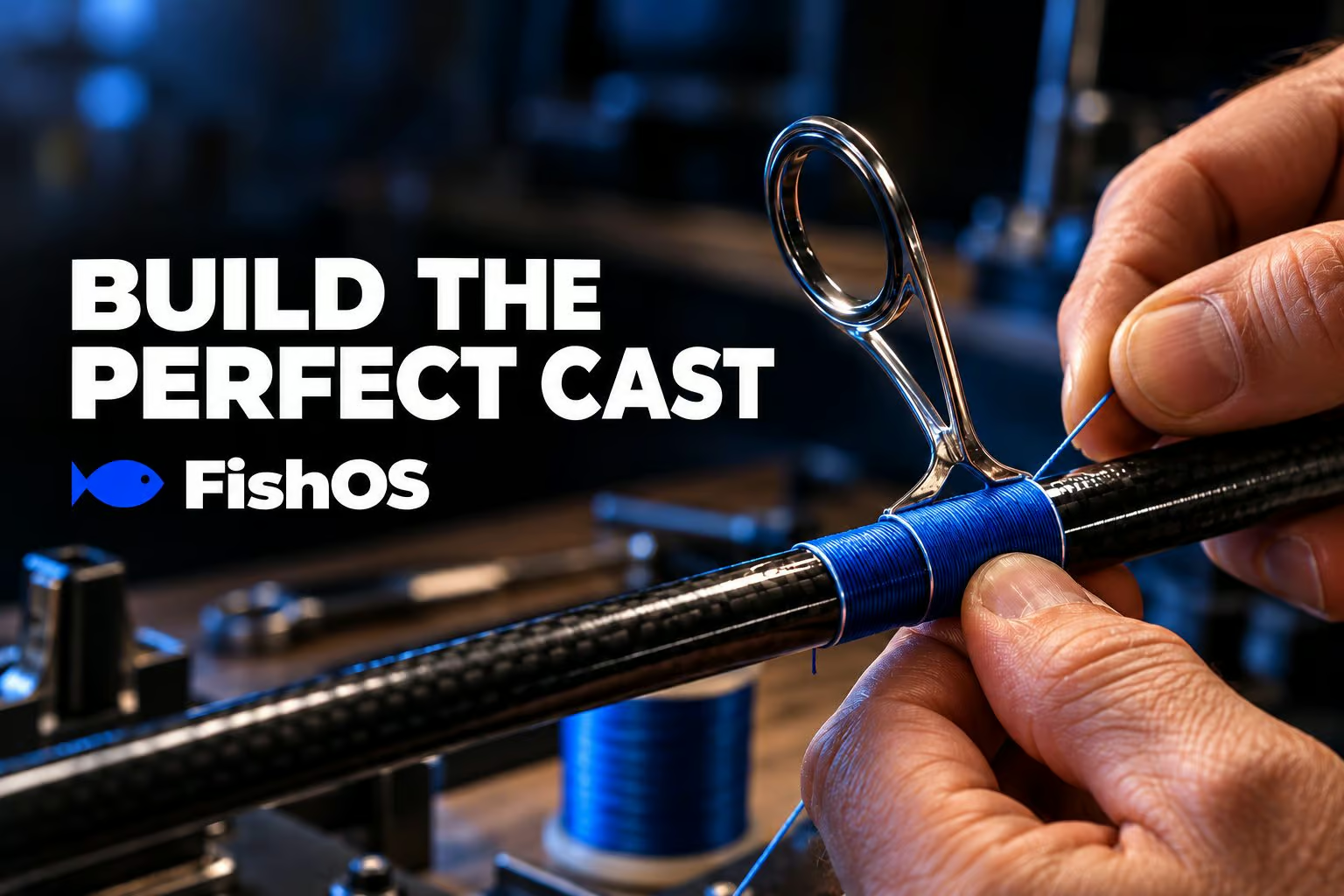
Building your own fishing rod lets you match the tool to exactly how you fish, from the blank’s length, power and action down to the handle, reel seat and guides. A custom rod builder picks every component for one job instead of settling for the closest fit on a store shelf. The International Custom Rod Building Exposition, the largest custom rod building expo on the planet, takes place in Winston-Salem on February 20 and 21, 2027.
What you gain from building your own rod
A custom build starts with the fish and the technique, then works backward to the parts. You choose the length, power and action for the performance you want, whether that is feeling a light bite from a wary bass or driving a hook into a redfish. Handle shape and material are picked for how the rod sits in your hand, and guide placement is set for the specific blank and the way you plan to fish it.
The rod can also be made to look like no other. Color combinations, decorative thread wraps and custom lettering let a builder mark a rod as their own, and the finished piece can be as plain or as detailed as they want.
What goes into a custom rod
The main components a builder selects are:
- The blank, which sets the length, power and action
- The handle material and shape
- The reel seat
- The guides, including where they sit along the blank
- Finishing touches such as thread wraps, color and lettering
Guide placement is a setting worth choosing with care, not decoration.
How to choose a blank: action first
Of the two numbers printed on most blanks, action and power, action is where to start when you are matching a rod to a technique. Action is the main characteristic to weigh when tailoring a rod to a specific technique. Power still matters, but action, meaning where and how much the blank bends under load, is what lines up a rod with a presentation. Decide the species and conditions you fish most, then pick action and power to suit.
How to set guide spacing: chart first, then test
Guide placement is worth approaching carefully. Guide spacing charts give builders a proven starting point based on the length, power, action and intended application of a blank. A chart gets a new builder close with measurements already worked out for similar blanks.
From that baseline, the blank itself has the final say. Start with the chart for a proven baseline that saves time, temporarily install the guides and run your line through them, then load the rod and see how the blank responds. If the line follows the blank cleanly, you have a good layout; if not, move a guide and test again. The reason to do this before any epoxy goes on is cost: temporary placement is cheap, and removing guides after finishing is not.
The skill and patience the build takes
Rod building is a chance to develop a new skill and work with your hands on something tied to your fishing. The process rewards patience and attention to detail, running from preparing the blank and aligning the guides to wrapping thread and applying finish, each step done by hand.
Does building a rod cost less than buying one?
Not automatically. Quality blanks, components, tools and finishing supplies can add up, particularly for a first-time builder. The payoff is a rod built around one angler’s fishing rather than a shelf average, and it shows the first time the rod bends under a fish.
Where to learn custom rod building in 2027
The expo runs February 20 and 21, 2027 at the Benton Convention Center, 301 West 5th Street, Winston-Salem, NC 27101, according to the official ICRBE ticketing page, which lists the Saturday session from 8 to 5. The event’s organizers say it features seminars and a learning center that walk through the entire process, whether it is a builder’s first rod or their hundredth, and that thousands of custom rod builders attend alongside more than 60 vendor booths carrying rod-building materials. Details are posted at ICRBE.net.
What to do now
- Define the job first. Pick the species and conditions you fish most, then choose the blank’s action and power to match, since action is the primary characteristic for tailoring a rod to a technique.
- Start guide placement from a spacing chart for the blank’s length, power, action and application, which gives a proven starting point.
- Static test before you commit. Temporarily install the guides, run line through them, then load the rod and watch how the line tracks, as Mud Hole recommends.
- Tape guides in place and confirm you are happy before wrapping and finishing, because temporary placement is cheap and guide removal after finishing is not.
- Budget for the full kit, including blank, components, tools and finishing supplies, and if you want hands-on instruction, mark February 20 and 21, 2027 for the ICRBE expo at the Benton Convention Center and check ICRBE.net for seminar details.
FAQ
When and where is the 2027 custom rod building expo?
The International Custom Rod Building Exposition is set for February 20 and 21, 2027 at the Benton Convention Center, 301 West 5th Street, Winston-Salem, NC 27101, according to the event’s official ticketing page, which lists the Saturday session from 8 to 5.
Is building a custom fishing rod cheaper than buying one?
Not necessarily.
What parts can you choose when building a custom rod?
Builders select the blank, which sets length, power and action, along with the handle material and shape, the reel seat and the guides, plus thread wraps, color and lettering.