Quick Answer
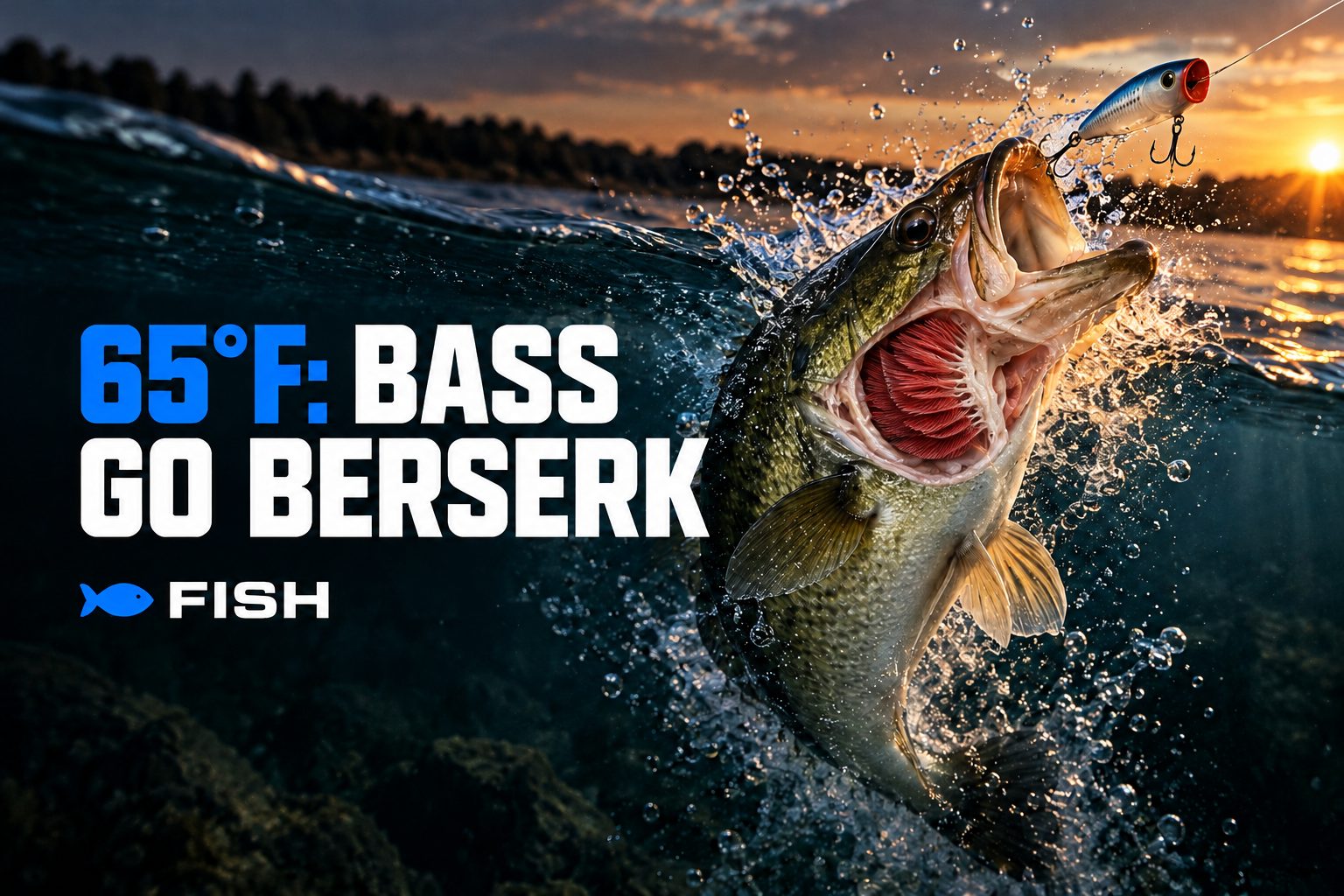
The best time for topwater bass fishing runs from early spring through fall, with the strongest general window arriving when water reaches 62 to 65°F. Spring can offer all-day action, summer is more productive before mid-morning and near sunset, and cooler early-fall days may also produce surface strikes throughout the day.
What Water Temperature Is Best for Topwater Bass?
Topwater action begins when water temperatures reach the low to mid-50s°F in early spring. It increases in the 60 to 65°F range and can continue through the late spawn, when water is in the 70s°F, while bass may still take surface baits above 80°F.
The source identifies 62 to 65°F as the point when topwater fishing for largemouth and smallmouth bass is in full swing. That range generally falls in mid to late spring in the area described, although timing varies by region. Anglers should temper expectations in early spring, late fall and the hottest part of summer.
Bass metabolism changes with water temperature. In colder water, bass generally feed more sluggishly. Warmer water makes them search more actively for food. It also brings baitfish and other prey into shallow surface water, where bass can find them.
How Does Topwater Fishing Change Through the Seasons?
What Should Anglers Expect in Spring?
Early spring brings more frogs, insects, minnows and other food into the water, giving bass a wide menu and making some surface lures harder to sell. As spring advances and bass target larger prey, topwater action develops alongside the 62 to 65°F range.
Pre-spawn bass also need food before nesting, laying eggs and protecting the bed. Near a bed, use a slower presentation. Pop a minnow-style lure gently, then let it quiver in place for five or six seconds, sometimes longer.
When Is Topwater Most Productive in Summer?
Post-spawn bass feed hard after the spawn, and large, splashing topwater baits can attract attention. In water from the 70s to 80s°F, target shaded cover such as docks, logs and lily pads. Water in that range can still support all-day topwater action with the right bait, particularly beneath overcast skies.
As summer heats up, concentrate effort in the early morning or as the sun sets. A frog worked through weeds and pads can still produce a bite, even when the broader surface bite is limited.
Why Is Early Fall Worth Fishing?
The first few weeks of fall offer one of the strongest topwater periods because temperatures are falling while the aquatic ecosystem remains active. Prey continues moving as bass build reserves for winter.
Mornings and evenings remain strong during early fall, followed by a short stretch when surface baits can be effective all day. The season also allows varied lure selection: frogs around weeds, pads and woody structure; spooks over rocky points and around docks; and poppers in most situations.
When Does Winter Topwater Activity End?
Late fall and early winter usually provide the last worthwhile chance for surface strikes. Bass often stop responding to prey in the upper water column below 50°F, and in many water systems they move toward the bottom once temperatures fall below 48 to 50°F.
A warming trend, a cold snap or a barometric change may bring brief surface activity. Most anglers have trouble spotting these windows in time, so many get better results by saving topwater tackle for spring.
What Time of Day Is Best for Topwater Bass?
Time of day depends on the season. Spring topwater can be effective all day. From late spring through summer, the better windows are before mid-morning and one to two hours before sunset. Cooler fall days may provide all-day action.
No clock time works on every lake. Check the water temperature, season and local conditions before expecting bass to feed in the upper water column.
Is Nighttime Topwater Fishing Worth Trying?
Nighttime fishing can be productive during hot summer weather. Daytime heat pushes bass toward dense cover or deeper water, and after sunset they may return to shallow feeding areas. Poppers, hollow-bodied frogs, spooks and buzzbaits create enough surface disturbance for bass to locate the lure without sunlight.
Focus on grass lines, weed beds, fallen timber and docks. Lit docks are worth particular attention because the lights attract zooplankton, which can draw baitfish and bass.
How Do Wind, Rain and Sun Affect Topwater Bass?
What Works in Wind?
Rough water can interfere with a lure’s surface action, casting and boat positioning. Sheltered areas around docks and lily pads, leeward points and protected bays offer some protection from wind.
Windward points, shorelines and shallow weed beds can also concentrate baitfish. For visible surface disturbance, use baits that ride high in the chop, including the Super Spook and Lucky Craft Gunfish walk-the-dog models.
Do Clouds and Rain Help?
Clouds and rain can make largemouth and smallmouth more willing to feed on surface baits throughout the day. Dark skies remove some of the pressure associated with strong sun, while raindrops add surface movement. Appropriate rain gear remains important for staying comfortable during the session.
How Should Anglers Fish in Bright Sun?
Early mornings and late evenings are the stronger periods on sunny days. Try a popper near docks or a buzzbait along grass lines in the morning, then a spook or prop bait around schooling baitfish in the evening.
During the middle of the day, pitch frogs into matted vegetation and lily pads, or work poppers around shaded docks and woody structure. Surface strikes may be less frequent in the heat, but a fish caught during that period can be the day’s largest.
How Did a Texas Angler Use Topwater for Big Bass?
A Texas fishing account described an early-morning approach for large spring bass. Richard McCarty, a Lake Fork angler who had donated three ShareLunkers, kept a plastic lizard rigged and ready after casting a topwater bait. He reported catching the fish that struck but did not take the moving bait 30 to 40 percent of the time.
That account also stresses repeated, accurate casts. Texas Parks and Wildlife reported that Lake Fork anglers caught 3,884 bass weighing at least seven pounds from March 2003 through March 2005. Of those, 592 weighed at least ten pounds, while 27 reached the 13-pound threshold for the ShareLunker program. Texas Parks and Wildlife provides the full account.
Key Considerations
- Check the water temperature and local conditions when choosing when to fish.
- Season changes the usable hours: spring may allow all-day fishing, summer generally favors cooler periods, and cooler early-fall days can also work all day.
- The available food changes the presentation. Early spring offers bass many prey choices, while larger prey become more important as spring advances.
- Wind, cloud cover and sun affect lure behavior and bass location. Match the bait to the cover and conditions.
- Late-fall and winter surface action is less dependable, especially once water falls below 48 to 50°F.
What to Do Now
- Check the water temperature before choosing the fishing window.
- Plan the session around spring, cooler fall mornings and evenings, or summer’s low-light periods.
- Select cover and lure combinations for the day’s wind and sunlight.
- Work spawning bass with slower, paused surface presentations.
- Record the temperature, time, cover and lure for each successful session.
FAQ
What Water Temperature Is Best for Topwater Bass?
Topwater action begins in the low to mid-50s°F during early spring, increases in the 60 to 65°F range, and reaches its strongest general window at 62 to 65°F.
What Is the Best Time of Day for Topwater Bass Fishing?
Spring topwater can be effective all day. During late spring and summer, fish before mid-morning and one to two hours before sunset. Cooler fall days may also produce all-day action.
Is Topwater Good in Summer?
Yes. Water in the 70s to 80s°F can still produce good topwater action, especially beneath overcast skies and around shaded cover. As the water warms further, early morning and sunset become the better windows.
Can Bass Bite Topwater at Night?
Yes, particularly during hot summer nights. Poppers, hollow-bodied frogs, spooks and buzzbaits create surface disturbance around grass lines, weed beds, downed timber and docks.
Should Anglers Use Topwater in Winter?
Late fall and early winter may offer the last worthwhile chance, but surface activity is less dependable below 50°F. Many bass systems shift toward the bottom once water falls below 48 to 50°F.
Related Coverage
- Why the Offseason Is the Best Time to Buy a Fishing Boat
- The South’s Hot Winter Bass Fishing Really Starts Brewing in Fall