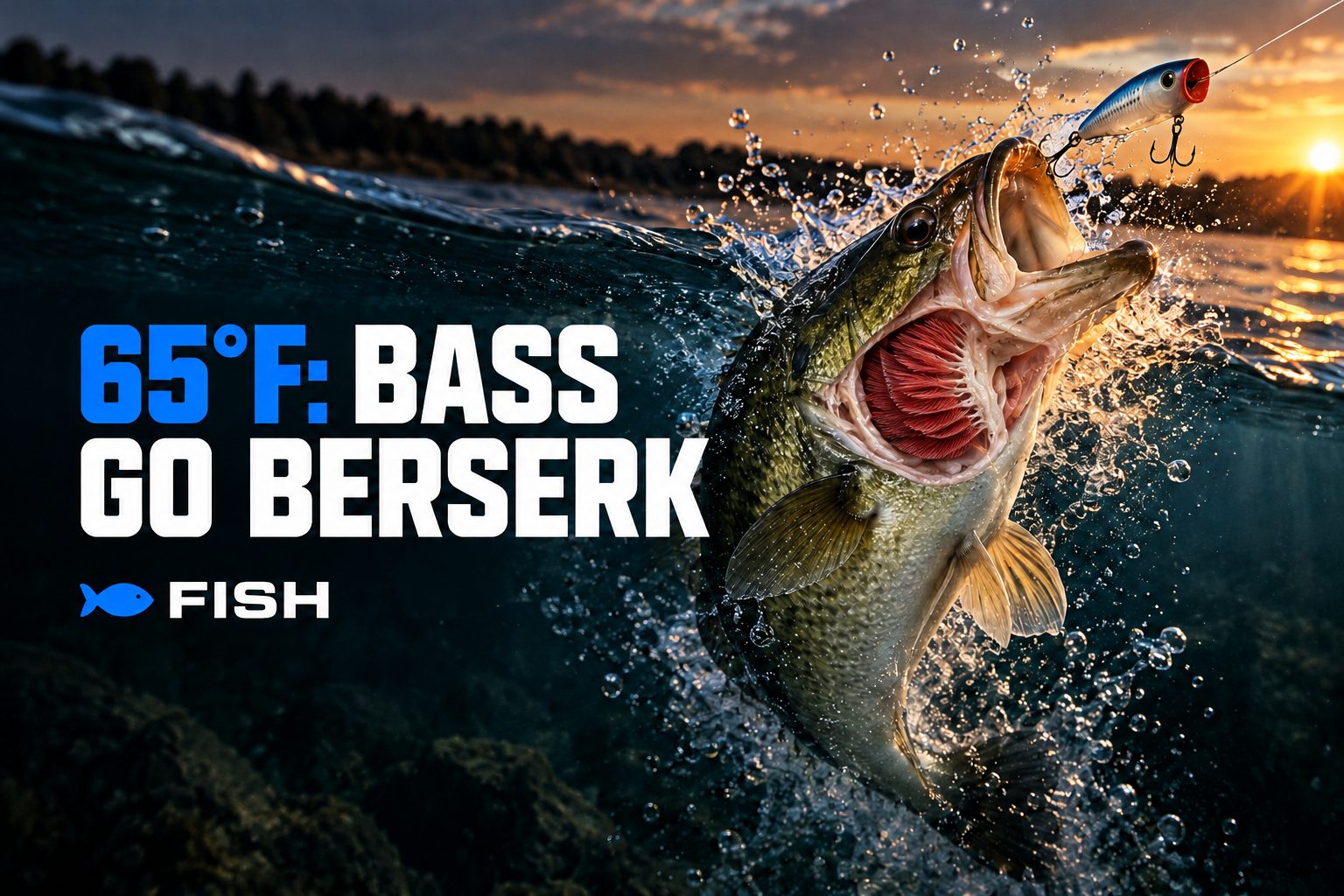
Topwater bass fishing depends on water temperature, season, time of day, and weather. Dial them in and your topwater bass sessions can produce strikes from largemouth and smallmouth alike.
Why water temperature is the starting point
Bass are cold-blooded, so their metabolism tracks the water around them. Cold water slows feeding, warmer water speeds it up, and that single fact drives nearly every topwater decision a fisherman makes.
The topwater bite begins as winter loosens its grip. As water warms, baitfish and other prey move into the shallows, and bass follow. In early spring, action picks up when water temperatures reach the low to mid-50s (°F). It really ramps up in the 60 to 65°F range and holds through the late spawn, when water is well into the 70s. Bass will still hit topwater in water over 80°F, though the bite narrows to specific times of day.
That range gives most anglers a window from spring through fall. The realistic peak, the time when large and smallmouth are most willing to chase a surface lure, is 62 to 65°F, which lands in mid to late spring across most of the country.
Topwater through the seasons
Spring
Early spring floods the shallows with frogs, insects, minnows, and other small prey. Bass feed actively, but they have a long menu to pick from, which can make them pass on a surface offering. As spring progresses, well-fed bass start targeting larger prey, and that’s when topwater action takes shape. It lines up with the 62 to 65°F range, and it stacks on top of pre-spawn appetite, since bass need to build energy for nesting, egg-laying, and guarding beds.
Once bass are on beds, they hold tight to structure but stay fiercely protective. A slower presentation works here. Minnow-style lures popped gently, then quivered in place for 5 to 6 seconds or longer, can pull protective strikes that a fast retrieve never would.
Summer
Post-spawn bass are hungry and recovering. Water sits in the 70s to 80s depending on the region, and splashy topwater baits pull reaction strikes. The cooler micro-habitats matter most: docks, logs, and lily pads that provide shade. Water in the 70 to 80°F range still produces topwater action through the day with the right baits, especially on overcast skies.
As summer deepens and water warms further, the topwater window contracts. Early morning and the hour or two before sunset become the realistic play. There is a point in the hottest stretches when topwater becomes a long shot, though a frog worked through pads and weeds can still draw a bite. Knowing when to switch to a different tactic saves a lot of empty hours.
Fall
Cooler air and water give both angler and bass more hours in the day. The first few weeks of fall are widely considered one of the strongest topwater windows of the year. The aquatic ecosystem is still running at full speed, prey is on the move building reserves for winter, and bass are keyed in. Mornings and evenings still edge out midday, but there is usually a short stretch in early fall when topwater works all day.
Lure variety opens up in fall. Frogs still produce around weeds, pads, and woody cover. Spooks still work over rocky points and around docks. A popper is hard to ignore in nearly any setup. The fall bite is one worth chasing before the boat goes into storage.
Winter
In most regions, late fall and early winter are the last realistic shot at a worthwhile topwater bite. Bass largely stop responding to prey in the upper water column once temperatures fall below 50°F, and in many lakes they commit to the bottom once water drops below 48 to 50°F. Warming trends followed by a cold snap, barometric swings, and the right lake can occasionally spark a short topwater flurry, but those windows are narrow and tough to predict. For most anglers, winter is the time to put the topwater rod down and pick another tactic.
Best time of day for topwater
There is no single clock time that holds for every lake, but some pattern is consistent.
- Spring: Topwater can be effective all day.
- Late spring through summer: Better before mid-morning and again one to two hours before sunset.
- Cooler fall days: All-day action is common.
Nighttime topwater
Night fishing is not for everyone, but in the heat of summer it can be the best topwater bite of the day. Oppressive daytime heat pushes bass into heavy cover or deeper water. Once the sun sets, they push back into their shallow feeding lanes looking for dinner. Without light, they rely on their other senses, and a popper, hollow-bodied frog, spook, or buzzbait makes enough surface disturbance to draw their attention.
The same places that produce during a spring day bite work at night: grass lines, weed beds, and downed timber. Docks deserve extra focus, especially any with lights. Dock lights pull in zooplankton, which pull in baitfish, which pull in bass looking for an easy meal.
Topwater tactics for any weather
Wind
Wind disrupts the natural action of many topwater lures and makes boat positioning a chore. The first move is to find shelter: leeward points, protected bays, and pockets around docks or lily pads where the wind is broken. The second move is to embrace the chop. Wind can push baitfish along windward points, shorelines, and shallow weed beds, and bass often follow. Baits that ride high in the surface chop, walk-the-dog style lures such as the Super Spook and the Lucky Craft Gunfish, are common choices for working those conditions.
Rain and clouds
Cloud cover and rain dim the shallows, and bass feel more secure roaming open water. Unlike hot sunny days, largemouth and smallmouth will respond to surface baits all day long under dark skies. The practical barrier is the angler’s comfort. Good rain gear and a plan to stay out matter more than the forecast.
Sunny days
Bright sun pushes bass toward cover, especially through the middle of the day. Early morning and late evening remain the prime windows. Mornings favor a popper near docks or a buzzbait along grass lines, while evenings suit a spook or prop bait imitating schooling baitfish. Mid-day sun is not a dead zone. It is a time to slow down and pitch a frog into matted vegetation, lily pads, shaded docks, and woody structure. Poppers also work in those tight spots. Strikes are fewer, but the fish that do bite in the heat of the day are often the biggest of the day.
Putting it together
Topwater bass fishing rewards anglers who match the season, the temperature, and the hour. The 62 to 65°F window in spring and the early fall transition produce the most consistent surface action. Summer pushes the bite to low-light hours and shaded cover. Winter is mostly a wait until spring. Weather is not the obstacle it looks like. Wind, rain, and clouds each create their own opportunities. The biggest variable is usually the angler’s willingness to stay out when the conditions turn.
FAQ
What water temperature is best for topwater bass?
The topwater bite begins in the low to mid-50s (°F) in early spring, peaks in the 62 to 65°F range, and continues through the 70s. Bass will still hit topwater in water over 80°F, though the bite narrows to early morning, evening, and shaded cover.
What is the best time of day to fish topwater for bass?
In spring, topwater can be productive all day. From late spring through summer, focus on early morning and the hour or two before sunset. Cooler fall days often produce all-day action.
Can you catch bass on topwater at night?
Yes, especially in summer. After dark, bass move back into their shallow feeding lanes and home in on the surface disturbance of poppers, hollow-bodied frogs, spooks, and buzzbaits. Focus on grass lines, weed beds, downed timber, and docks, particularly any with lights that pull in baitfish.
Related coverage
This article summarizes reporting from fishingduo.com.