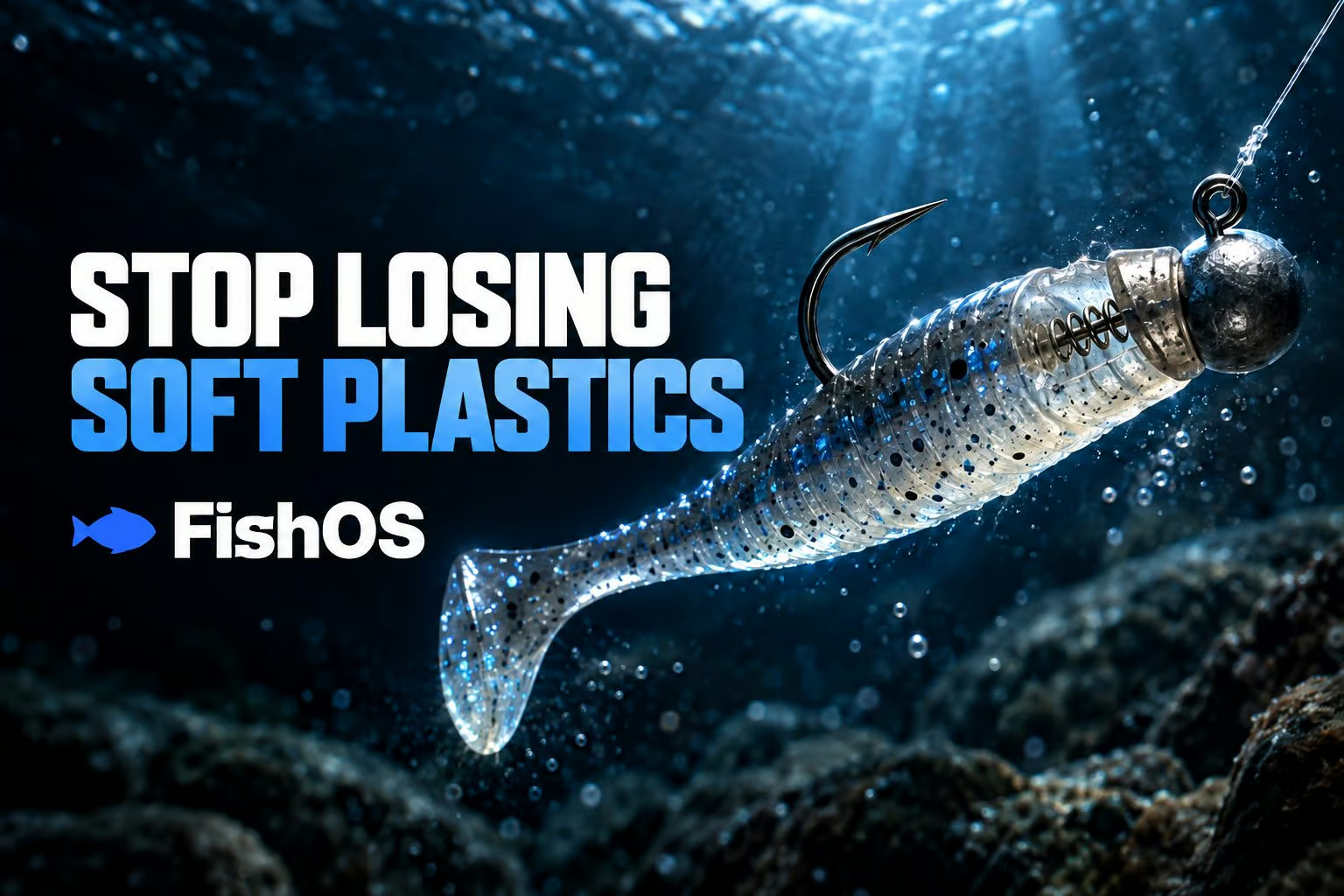
Anglers can lose fewer soft plastic fishing lures by securing the bait at the hook, choosing retained-rigging tackle, and checking the line before plastic ends up on the bottom. These changes can help protect the lure during short strikes, toothy fish and snags, and may reduce the chance that fish will mistake discarded plastic for food.
Why soft plastic lures end up on the bottom
Soft plastic is soft and pliable because that movement gives a lure its action. The same material tears easily, stretches around teeth and can pull out of a small hook. Missed strikes, ordinary wear and toothy predators can all leave a bait on the bottom.
The environmental cost goes beyond replacing a damaged lure. Maine biologists studying salmonids, including native brook trout and lake trout, found soft plastic lures in fish stomachs. The lures had been picked up from the bottom rather than released through a missed strike. The Maine Department of Inland Fisheries and Wildlife says fish can ingest these lures off the bottom, which can harm their health.
Research in Water, Air, & Soil Pollution also examined what happens after soft plastics enter a lake. Snorkel surveys at Charleston Lake in eastern Ontario found a deposition rate potentially as high as about 80 soft plastic lures per kilometre of shoreline per year. In laboratory testing, eight lure types were immersed at 4°C and 21°C for two years. Most showed little evidence of decomposition and remained swollen, meaning they did not disappear quickly from the environment.
Attaching a lure to the hook may keep more of it out of the water.
How can you keep a soft plastic on a jighead?
Use a small drop of cyanoacrylate glue
A tiny drop of super glue on the jighead collar may help a fish hold on when it short strikes. Thread the soft plastic onto the hook, add the glue and then push the lure back toward the rear of the jighead to seat it.
Glue changes the normal routine because the lure is fixed in place. Anglers who switch colors often can tie on a fresh jighead instead. When the plastic finally wears through, scrape the remaining material from the jighead and reuse the head on another bait.
Apply glue carefully and keep it away from the lure’s movement. The source article describes the method as a way to reduce the chance that a short-striking fish will rip the bait away.
How do screw-lock jigheads and wide-gap hooks work?
A screw-lock jighead has a small spring-shaped coil behind the head, positioned over the hook shank. After threading the lure partway down the shank, twist the bait around the coil. The coil drives into the nose of the lure and seats it behind the jighead.
Once seated, the lure is difficult for a fish or snag to pull free. For a color change, back the lure out of the coil. The source says this usually causes relatively little damage, and the bait can often be used again.
Screw-lock wide-gap hooks serve the same purpose for weedless, Texas and Carolina rigs. They may cost a bit more than a pack of budget wide-gaps, and these, too, may save your baits, as they may stop them from being ripped off or threaded up the line during the fight and shaken off, which is a common occurrence.
What is a wacky rig tool?
A wacky rig tool holds a stick bait and positions a rubber band around its center. Insert the bait into the wider end, slide a band down the tool and place it at the middle of the lure. Then pass the hook under the band rather than through the plastic body.
This setup may keep the bait on the hook during the retrieve and through short strikes. Stick baits such as the Yamamoto Senko and YUM Dinger are very soft, and a thin wacky hook can pull straight through them. The rubber band is tougher than the lure material, making it less likely that a fish will shake the bait free.
The wacky presentation works by folding the lure briefly when the rod twitches. As it falls, the bait straightens and wobbles. The tool does not change that action; it changes how securely the hook holds the plastic.
What to do now
- Inspect your current rig. Check whether the soft plastic is loose, torn around the hook or sitting where a short strike can pull it away.
- Choose one retention method. Use a small drop of glue for a fixed jighead presentation, a screw-lock jighead or wide-gap hook for a reusable setup, or a rubber band for a wacky-rigged stick bait.
- Check the lure during the retrieve. Stop and retrieve a lure when it starts to ride up the line or looks loose.
- Keep spare retention parts in the tackle bag. Carry replacement rubber bands and bring spare jigheads so you can replace a worn or glued rig instead of leaving plastic behind.
- Dispose of used plastic properly. Put it in a trash can or recycling canister. The Maine Department of Inland Fisheries and Wildlife notes that some boat launches, fishing clubs and retailers offer bait recycling programs.
What does the research add?
The Charleston Lake study found that soft plastic lures did not break down quickly in the laboratory and remained swollen after two years of immersion, so a lost lure does not simply disappear. Maine biologists found soft plastic lures in the stomachs of salmonids, and the Maine Department of Inland Fisheries and Wildlife says ingesting these lures can negatively impact fish health.
A separate outdoor mesocosm study found that soft plastic lures reduced the decomposition of Ecklonia radiata detritus by 14.4% and decreased its C/N ratio over time. The study examined how discarded gear interacts with marine organic material.
For an angler, the practical connection is direct: fewer detached baits mean fewer pieces of plastic left where fish can find them. Retention tackle helps at the hook, while checking the bait and disposing of worn plastic address the loss that happens after a lure leaves the rig.
Which setup fits your fishing?
- Glue: Best suited to a lure that can stay on one jighead until it wears out.
- Screw-lock jighead or wide-gap hook: Useful when a bait must stay secure through fish, weeds and snags but may need to be removed and reused.
- Rubber-banded wacky rig: Useful for soft stick baits that need their flutter while being held more securely on a thin hook.
The aim is a retained lure that still moves naturally.
FAQ
Why are lost soft plastic lures a problem for fish?
Biologists studying salmonids in Maine found soft plastic lures and pieces of lures in the stomachs of fish that had picked them up off the bottom, mistaking them for food. Species such as bass can expel swallowed soft plastics, but salmonids do not.
What is the easiest way to keep soft plastics on a jighead?
A small drop of super glue on the jighead collar, applied just before the lure is seated, may make it harder for a short-striking fish to rip the bait off. Anglers who change colors often tie on a fresh jighead and rig a new plastic because the glue fixes the lure in place.
Do screw-lock hooks really save soft plastic baits?
Once seated, fish and snags have difficulty ripping the bait free, and the lure can usually be backed off with little damage for a color change.